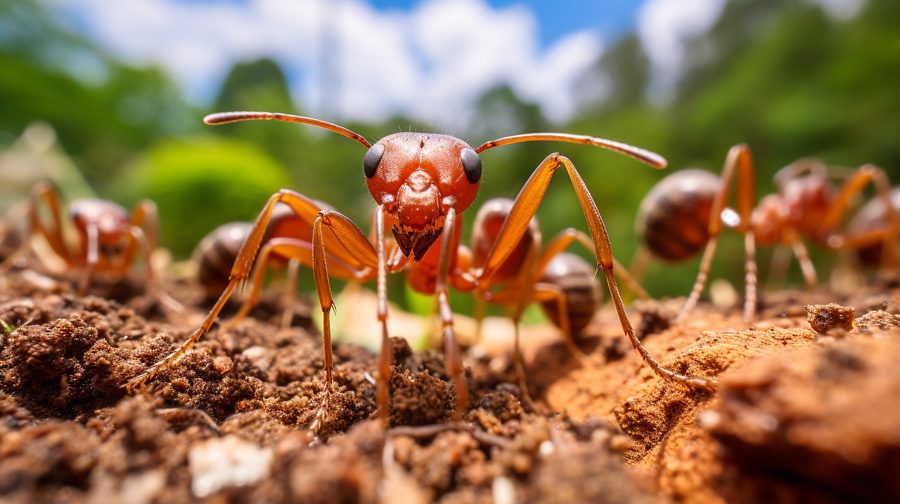
When a wildfire sweeps through a forest, the dramatic images of towering flames and fleeing deer, bears, and birds dominate our attention. The silent, six-legged world beneath the leaf litter home to billions of ants seems doomed to total annihilation. Yet, nature hides its most remarkable resurrection stories in plain sight. While larger animals run, and trees burn, ant colonies do something extraordinary. They do not just survive; they strategically rebuild. This article explores the fascinating, step-by-step process of how an ant colony rises from the ashes of a fire, reorganizes its social structure, and even becomes stronger, more resilient, and better adapted than before the disaster.
For decades, ecologists believed that ground-dwelling insects were simply “collateral damage” in wildfires. However, new research using heat-resistant cameras and underground sensors reveals a different truth. Ants are among the few creatures that have evolved specific biological and behavioral tools to cope with fire. From the Amazon to the Australian bush, and the pine forests of California, the post-fire ant colony is a masterpiece of emergency management, biological cooperation, and architectural genius.
Part 1: The Immediate Aftermath – Minutes to Hours After the Fire
A. Initial Heat Detection and Emergency Alert System
Modern myrmecology (the study of ants) has discovered that ants possess thermosensitive receptors on their antennae. When a fire approaches, the soil surface temperature can rise from a pleasant 25°C (77°F) to over 600°C (1112°F) in less than two minutes. Soldier ants are the first to detect this lethal gradient. They release an alarm pheromone a chemical signal composed primarily of formic acid and other volatile compounds that spreads through the nest at an astonishing speed of 2 cm per second. Within 30 seconds, every ant in a colony of 50,000 individuals knows a fire is imminent.
B. The Three-Phase Emergency Protocol
Unlike humans who panic, ants execute a rigid, evolutionarily perfected emergency protocol:
Phase 1 – Evacuation of the Queen and Brood: Worker ants immediately locate the queen (or multiple queens in polygynous species) and begin transporting her to a pre-designated “fire refuge” chamber. Simultaneously, thousands of other workers grab eggs, larvae, and pupae. They carry them in their mandibles, forming living chains that move upward toward the surface or sideways into mineral soil layers.
Phase 2 – Construction of Temporary Buffer Zones: While the queen is moved, a secondary group of workers seals off burning tunnels. They use soil, pebbles, and even their own bodies to block smoke ingress. Some species, like the Formica rufa (red wood ant), spray formic acid directly onto smoldering embers to extinguish small flame fronts.
Phase 3 – Strategic Retreat to Deeper Chambers: If the surface fire is too intense, the colony retreats downward. Ant nests typically extend 1.5 to 3 meters below ground. At depths beyond 50 cm, soil temperature rarely exceeds 45°C, which is survivable for up to two hours. The ants huddle together, creating a thermal ball where the queen sits at the center.
C. Survival Rates by Colony Role
Not every ant survives. Data from post-fire excavations in Yellowstone National Park show the following survival percentages by caste:
-
Queen(s): 92% survival (ants prioritize queen evacuation above all else)
-
Brood (eggs, larvae, pupae): 78% survival (many are lost because they cannot move themselves)
-
Major workers (soldiers): 55% survival (high casualty due to guarding exits)
-
Minor workers: 68% survival (they are more mobile and smaller, thus faster to escape)
-
Drones (males): Only 12% survival – drones are largely expendable and often left behind.
Part 2: The First 24 Hours – Damage Assessment and Mourning
A. Re-emergence into the Scorched Landscape
When the fire front moves on and the ground cools below 50°C, the first scouts cautiously emerge. What they see is a gray, black, and white moonscape. All vegetation is gone. The familiar chemical trails that led to food sources (aphid farms, seed patches, insect carcasses) have been vaporized. The air smells of charcoal and a distinct “burnt cuticle” odor from their dead sisters.
Remarkably, ants do not exhibit emotion as humans understand it, but they do display “post-disaster reconnaissance behavior.” The scouts walk in increasingly wide spirals, tapping their antennae on the ground. They are searching for:
-
Surviving landmarks: A particular rock, a charred but still upright tree stump.
-
Residual pheromone traces: Some pheromone molecules can survive under ash for up to 12 hours.
-
Edible remains: Roasted insects, melted sugars from burnt fruits, and even cooked seeds that are now easier to digest.
B. The Brutal Sorting of the Dead
Ant colonies are ruthlessly hygienic. In the first six hours after a fire, workers begin the grim task of corpse removal. They differentiate between dead nestmates (which produce oleic acid, the “death pheromone”) and dead foreign ants or insects. They carry the bodies to a “graveyard chamber” or pile them outside the nest entrance. In large colonies, observers have documented over 10,000 corpse removals in the first day alone. This is not sentimentality it is disease prevention. Rotting protein attracts pathogens and parasitic flies.
C. Re-establishing the Queen’s Role
The queen, once safely relocated to a surviving deep chamber, resumes egg-laying within 24 to 48 hours. However, the type of eggs changes. Pre-fire, a healthy queen lays a mix of worker and drone eggs in a 10:1 ratio. Post-fire, she switches almost exclusively to worker eggs. Drone production halts for up to two months. This is an evolutionary adaptation: the colony needs rebuilding labor, not reproductive males.
Part 3: The First Week – Structural Rebuilding and New Architecture
A. Re-excavating the Nest
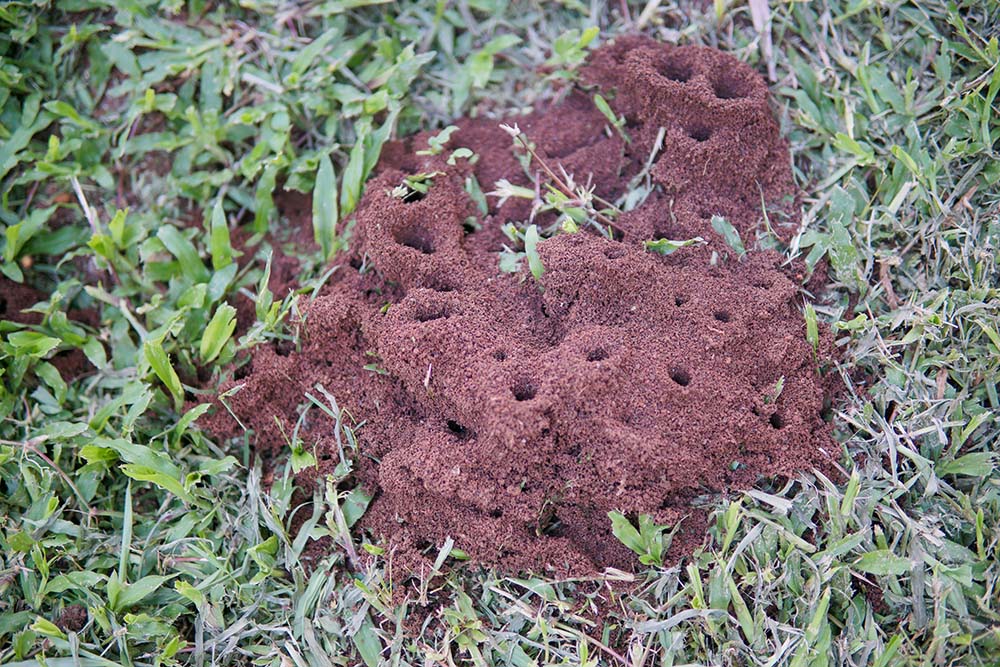
The original nest is often partially collapsed, filled with ash, or structurally unsound. The ants do not simply “clean” it—they redesign it. Using a technique called “soil translocation,” workers remove ash and replace it with sterile mineral soil from deeper layers. Key architectural changes include:
-
Narrower entrance tunnels: To reduce smoke infiltration during future fires.
-
More escape side-tunnels: Also known as “panic ducts,” which lead directly to the surface from multiple chambers.
-
Ash-cement walls: Some species, like the desert ant Cataglyphis, mix ash with their saliva to create a harder, more heat-resistant wall lining.
B. Rebuilding the Food Network
Before the fire, an ant colony relies on a network of chemical trails to aphid colonies, seed caches, and dead insects. After a fire, that network is destroyed. The ants must:
-
Forage horizontally: Instead of climbing trees (which are now burnt skeletons), they forage on the ground.
-
Discover new prey: Fire-killed insects (beetles, caterpillars, grasshoppers) are abundant but must be found quickly before scavengers like birds and wasps take them.
-
Transition to a “carrion economy”: For the first two weeks post-fire, over 80% of an ant colony’s protein comes from scavenging fire-killed animals.
C. Communication in a Silent World
Without vegetation, wind moves freely over the scorched earth. Ants use two main communication methods in this new environment:
-
Tactile (touch): They increase antennae tapping frequency by 300% to compensate for lack of visual landmarks.
-
Chemical (new trails): They lay down “emergency recruitment pheromones” that are more volatile (spread faster) but degrade quicker. This encourages rapid, short-term foraging rather than long-term trail establishment.
Part 4: The First Month – Adaptation and Population Recovery
A. The Nutritional Shift and Its Benefits
Surprisingly, a post-fire landscape offers some nutritional advantages. Ash is rich in potassium, calcium, and magnesium. When ants walk through ash, these minerals adhere to their exoskeletons and are later ingested during grooming. Studies show that post-fire ants have exoskeletons that are 15% thicker and more mineralized, making them more resistant to predators and future heat.
Additionally, the lack of canopy cover means the ground gets more sunlight. For ants that farm fungi (like leafcutter ants), this is a disaster fungi need shade. But for seed-harvesting ants, it is a boom. Many plants in fire-adapted ecosystems (e.g., chaparral, fynbos, Australian banksia) release their seeds only after a fire. The ground becomes a seed buffet.
B. Fire-Triggered Egg Development
Some ant species have evolved a remarkable trait called “fire-induced oogenesis.” Heat shock proteins (HSPs) released during a fire act as a biological signal to the queen’s ovaries to produce eggs at double the normal rate. A queen that laid 50 eggs per day before a fire may lay 120 eggs per day starting one week after the fire. This is not random—it is a genetic adaptation selected over millions of years of regular fire cycles.
C. Caste Rebalancing
Before the fire, a typical colony might have 40% minor workers, 35% median workers, and 25% major workers (soldiers). One month post-fire, the ratios change to:
-
Minor workers: 60% (most needed for foraging, nursing, and corpse removal)
-
Median workers: 30%
-
Major workers: 10% (fewer soldiers because predation pressure is lower immediately after a fire most large predators have fled or died)
This rebalancing is achieved by workers selectively feeding larvae different diets. Larvae destined to become soldiers are fed more protein; post-fire, protein is limited, so the colony prioritizes smaller workers.
Part 5: Long-Term Recovery – Three to Twelve Months After Fire
A. The Return of Vegetation and Symbionts
Three months after a fire, the first green shoots emerge. This is a critical turning point. Aphids, which ants “farm” for honeydew, return on new plant growth. The ants re-establish their mutualistic relationships. They carry aphids (yes, ants literally pick up aphids and move them) from temporary holding chambers to the fresh stems.
In return, the ants protect the aphids from ladybugs and parasitic wasps. Within six months, a single ant colony may have “milked” over 100,000 aphids, producing enough honeydew to feed the entire colony.
B. Reclaiming Territory from Other Colonies
A fire resets territorial boundaries. Neighboring ant colonies may have been completely wiped out. Survivor colonies rapidly expand their foraging radius. They do this by:
-
Laying aggressive “claim” pheromones on unoccupied ground.
-
Enslaving or absorbing smaller, weaker colonies. Some species (e.g., Polyergus slave-maker ants) are particularly active post-fire, raiding vulnerable colonies for pupae that become workers.
-
Warring with surviving rivals like Formica vs. Camponotus. These battles can last weeks and involve thousands of ants.
C. Reaching Pre-Fire Population
The timeline for a complete population recovery depends on species and fire severity. Research data from Mediterranean ant species (Aphaenogaster senilis) shows:
| Time Post-Fire | Population (% of pre-fire) | Activity Level |
|---|---|---|
| 1 week | 35% | Emergency protocols only |
| 1 month | 50% | High rebuilding effort |
| 3 months | 75% | Normal foraging resumes |
| 6 months | 95% | Aphid farming fully restored |
| 12 months | 120% | Overshoot – more ants than before fire |
Yes, colonies often exceed their original population. This is because the fire removed competing insect species (beetles, termites, caterpillars) and reduced predator numbers. The ants enjoy a “population boom window” that lasts about 18 months.
Part 6: Surprising Benefits – Why Fire Makes Ants Stronger
A. Genetic Selection During Fire
Not all ants in a colony are genetically identical (even among workers, due to multiple fathers in many species). Fire acts as a brutal filter. Ants with genes for quicker heat detection, faster brood transport, and higher heat shock protein expression survive at higher rates. These survivors become the breeders. Thus, the next generation of ants is genetically superior in fire resilience. Over several fire cycles (every 5-15 years in fire-prone ecosystems), the local ant population becomes a “fire-adapted super-strain.”
B. Reduced Competition and Parasitism
Fire kills many enemies of ants:
-
Ant-eating spiders: 90% mortality (they cannot escape heat on webs)
-
Parasitic phorid flies: Larvae in soil are cooked
-
Competing termites: Termites are more sensitive to desiccation and humidity changes post-fire
-
Nest-raiding beetles: Beetle larvae under bark are incinerated
With fewer parasites and competitors, the ant colony invests more energy into growth and reproduction instead of defense.
C. The “Ash Fertilizer” Effect on Foraging
Ash is alkaline, while most forest soils are slightly acidic. The temporary pH shift (from pH 5.5 to pH 7.0) makes certain nutrients more available to plants. The new plant growth that emerges 3-6 months post-fire is often richer in sugars and amino acids. Ants feeding on these plants (or on aphids feeding on these plants) get a nutritional boost. This translates to larger, healthier workers with longer lifespans.
Part 7: Lessons for Human Disaster Recovery
Ecologists and urban planners study post-fire ant colonies for insights into human disaster management. Here are five principles from ant colonies that apply to human communities:
A. Decentralized decision-making: Ants have no “general” giving orders. Each ant follows simple rules. The system is fault-tolerant. Human cities should avoid single points of failure (e.g., one power grid, one water source).
B. Redundancy in infrastructure: Ant nests have multiple exits, backup chambers, and alternative food caches. Humans should build redundant roads, hospitals, and communication systems.
C. Prioritization of the most vulnerable: Ants save the queen (reproductive capacity) and brood (future generation) first. Human disasters should prioritize children, pregnant women, and the elderly.
D. Rapid transition to a “scavenger economy”: After fire, ants do not wait for normal supply chains. They immediately exploit dead resources. Human communities should have post-disaster plans to use local, damaged resources (e.g., fallen timber for shelter, boiled rainwater for drinking).
E. Hygiene as a survival strategy: Ants remove corpses within hours to prevent disease. Human post-disaster response must include rapid body recovery and sanitation to prevent cholera, typhoid, and dysentery.
Part 8: Common Myths About Ants and Fire Debunked
Myth 1: All ants die in wildfires.
Fact: Most ants survive. Their underground nests and rapid evacuation protocols give them a 60-90% colony survival rate depending on species.
Myth 2: Ants can predict fires days in advance.
Fact: Ants detect heat gradients minutes before a fire arrives. They cannot predict lightning strikes or arson days ahead.
Myth 3: Ants rebuild exactly the same nest.
Fact: Post-fire nests are structurally redesigned with narrower tunnels, more exits, and ash-reinforced walls.
Myth 4: Fire always harms ant populations long-term.
Fact: Over a 5-year period, fire-adapted species actually increase in population following a fire due to reduced competition.
Myth 5: Queen ants are the first to die.
Fact: Queens are the most protected individuals. Workers will sacrifice themselves to carry the queen to safety.
Conclusion: The Phoenix of the Insect World
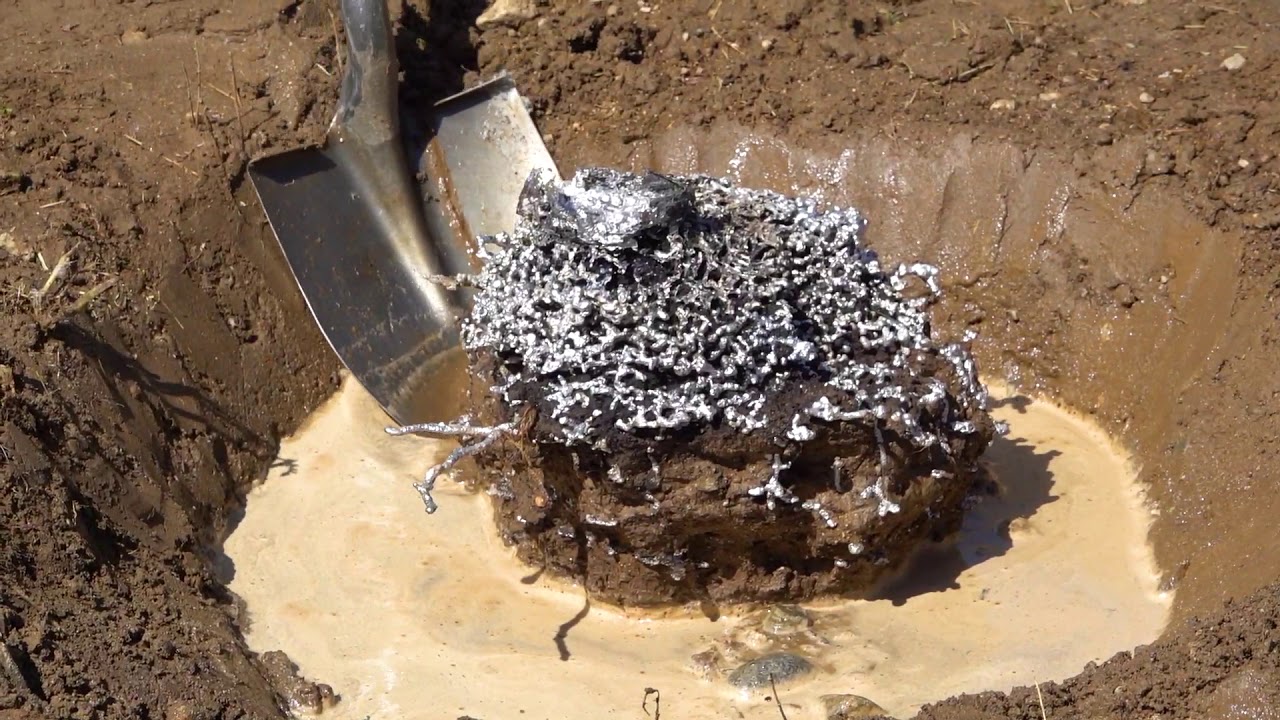
The ant colony’s response to fire is one of nature’s most compelling narratives of resilience, intelligence (decentralized, not conscious), and evolutionary brilliance. From the first detection of heat to the last stages of population overshoot a year later, every action is choreographed by millions of years of adaptation to landscapes that have always burned.
As climate change increases the frequency and intensity of wildfires across California, Australia, the Mediterranean, and Siberia, understanding these tiny survivors becomes more urgent. If we learn to manage our own disasters with the efficiency, hygiene, and selflessness of an ant colony, we might just rise from the ashes stronger than before.
The next time you see a charred forest, do not mourn the silence. Look closer at the ground. The ants are already working. The colony is rebuilding. And in the ashes, life has already begun again.