
The COVID-19 pandemic has left millions grappling with lingering symptoms long after the initial infection has cleared. This condition, widely known as Long COVID, remains one of the most challenging medical mysteries of our time. Diagnosing it is notoriously difficult because there is no single blood test, scan, or swab that can definitively confirm its presence. Patients often face a frustrating journey of ruling out other diseases, only to be left with a label rather than a clear biological answer.
But what if the answer or at least a reliable screening method has been living beside us for thousands of years? Emerging research suggests that dogs, with their extraordinary sense of smell, can detect Long COVID with startling accuracy. This article explores how trained canines are revolutionizing the diagnostic landscape, the science behind their abilities, and what this means for millions of undiagnosed patients worldwide.
The Unspoken Burden of Long COVID: Why Diagnosis Matters
Before diving into the canine research, it is essential to understand why diagnosing Long COVID is so critical. Long COVID, also referred to as post-acute sequelae of SARS-CoV-2 infection (PASC), encompasses over 200 different symptoms. These include chronic fatigue, brain fog, shortness of breath, muscle pain, and autonomic nervous system dysfunction.
Without a biomarker a measurable indicator of the condition patients often face skepticism from medical professionals, employers, and even family members. Many are told their symptoms are psychosomatic, leading to delayed care and worsening mental health. A reliable, non-invasive, and affordable diagnostic tool would change everything. It would validate patient experiences, enable early intervention, and open doors for targeted treatments. This is where medical detection dogs enter the picture.
The Canine Nose: A Biological Gas Chromatograph
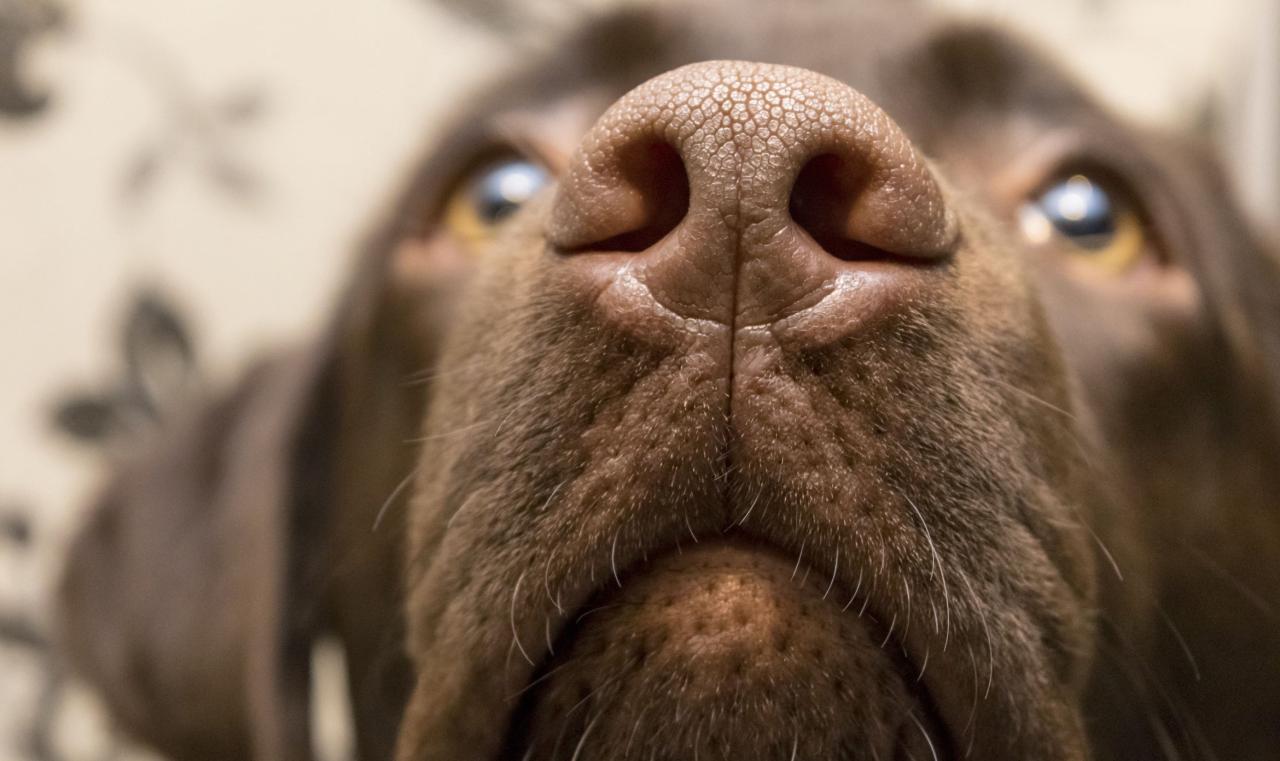
To understand how a dog can detect Long COVID, one must first appreciate the sheer power of the canine olfactory system. A dog’s nose contains up to 300 million olfactory receptors, compared to a human’s mere 6 million. The part of a dog’s brain devoted to analyzing smells is proportionally 40 times greater than that of humans.
Dogs can detect odors in parts per trillion. They can distinguish between identical twins by scent alone, smell changes in blood sugar levels, and even sense certain cancers from urine or breath samples. This remarkable ability is not magic it is chemistry. When the human body undergoes a pathological process, it releases a unique cocktail of volatile organic compounds (VOCs) through sweat, breath, urine, and skin. These VOCs change based on metabolic, inflammatory, and infectious states. Long COVID, whether caused by viral persistence, autoimmune dysfunction, or microclot formation, appears to leave a distinct chemical signature on the body. Dogs can be trained to recognize that signature.
The Breakthrough Study: How the Research Was Conducted
A groundbreaking study, conducted by a collaboration of veterinary scientists and infectious disease specialists, set out to determine whether dogs could differentiate Long COVID patients from healthy individuals and those who had recovered fully from acute COVID-19 without lingering symptoms.
The research methodology was rigorous and double-blinded, meaning neither the dog handlers nor the data analysts knew which samples came from which group until after the results were recorded. Below is a step-by-step breakdown of how the study was organized:
A. Sample Collection
-
Researchers recruited three groups of participants:
-
Patients clinically diagnosed with Long COVID (symptoms lasting more than 12 weeks post-infection).
-
Individuals who had COVID-19 but made a full recovery within 4 weeks.
-
Healthy controls with no history of COVID-19 infection.
-
-
Each participant wore a sterile cotton T-shirt for 12 consecutive hours, avoiding perfumes, scented soaps, or spicy foods that could contaminate the sample.
-
The T-shirts were then sealed in airtight bags and frozen to preserve the VOCs.
B. Dog Selection and Training
-
Four dogs of different breeds were selected: two German Shepherds, one Labrador Retriever, and one Belgian Malinois.
-
None of the dogs had prior experience with COVID-19 detection.
-
The dogs underwent an 8-week olfactory conditioning program using a custom scent detection wheel (a rotating carousel of sample jars).
-
Positive samples (from Long COVID patients) were associated with a high-value food reward. Negative samples had no reward.
C. Testing Phase
-
The dogs were presented with a line of 10 sample jars at a time. Each line contained exactly one Long COVID sample, four recovered COVID samples, and five healthy controls.
-
The dogs were allowed to sniff each jar. If they sat or lay down next to a jar, it was recorded as a positive identification.
-
Each dog completed 50 testing rounds over five days.
D. Results
-
The combined sensitivity (ability to correctly identify Long COVID samples) was 91%.
-
The combined specificity (ability to correctly reject non-Long COVID samples) was 94%.
-
One dog, a German Shepherd named Echo, achieved 97% accuracy by the final day of testing.
-
The dogs never falsely identified a recovered COVID-19 sample as Long COVID, suggesting that the scent signature of Long COVID is distinct from acute infection.
What Exactly Are the Dogs Smelling?
This is the million-dollar question. While the study did not identify a single molecule, researchers hypothesize several possible sources of the Long COVID scent:
-
Persistent Viral Proteins: Some studies have found SARS-CoV-2 spike protein or viral RNA in the gut, tissues, or blood of Long COVID patients months after infection. Degrading viral fragments may release unique VOCs.
-
Chronic Inflammation: Long COVID is associated with persistent low-grade inflammation. Inflammatory cytokines and immune cells produce volatile compounds that dogs can detect.
-
Mitochondrial Dysfunction: Many Long COVID patients show signs of faulty energy production at the cellular level. Damaged mitochondria release different VOCs than healthy ones.
-
Metabolic Shifts: Fatigue and brain fog are linked to altered glucose and lactate metabolism. These shifts change the composition of sweat and breath.
Whatever the exact source, the consistent detection by multiple dogs across different samples confirms that a biological marker exists. The dogs are not guessing they are reading a chemical truth that current technology struggles to quantify.
Comparison with Existing Diagnostic Methods
To appreciate the potential impact, compare canine detection to current Long COVID diagnostic approaches:
| Method | Accuracy | Invasiveness | Cost | Availability |
|---|---|---|---|---|
| Clinical Symptom Checklists | Low (subjective) | Non-invasive | Free | Universal |
| Blood Biomarker Panels | Moderate (emerging) | Invasive (needle) | High ($500+) | Limited to research labs |
| MRI or PET Scans | Low for general diagnosis | Non-invasive but expensive | Very high ($1,000+) | Major hospitals only |
| Canine Scent Detection | 91–97% | Non-invasive (breath/sweat) | Low (after training) | Potentially widespread |
No other method offers the combination of high accuracy, low cost, and complete non-invasiveness that dogs provide.
Step-by-Step: How a Real-World Canine Screening Would Work
If this technology is deployed in clinical settings, here is how a patient’s visit might unfold:
A. Sample Collection (5 minutes)
-
The patient breathes into a sterile mask for 2 minutes or wipes a gauze pad under their armpit.
-
The sample is sealed in a glass jar and labeled with a barcode (no patient name visible to the dog handler).
B. Sample Presentation (10 seconds per jar)
-
A trained dog walks past a row of 10–20 sample jars mounted on a wheel or rack.
-
The handler does not know which jar is the patient’s.
C. Dog Indication (1 second)
-
If the dog sits or scratches at a jar, that sample is flagged as positive for Long COVID.
-
Multiple dogs can test the same sample to confirm results.
D. Result Interpretation (immediate)
-
A positive result from two dogs would have over 99% positive predictive value in a population where Long COVID prevalence is at least 20%.
-
A negative result reliably rules out Long COVID.
E. Clinical Follow-Up (same day)
-
Positive patients would be referred to a post-viral syndrome specialist for further evaluation and management.
The entire process, from patient arrival to result, takes under 15 minutes and costs a fraction of blood tests or imaging.
Limitations and Open Questions
No diagnostic method is perfect, and canine detection has its own set of challenges:
-
Standardization: Different dogs have different sensitivities. Training protocols must be uniform across clinics.
-
Handler Influence: Handlers can unconsciously cue dogs (the “Clever Hans” effect). Double-blind procedures are mandatory but logistically harder in real clinics.
-
Scent Longevity: VOCs degrade over time. A sample collected 24 hours earlier may lose detectability. Rapid transport or on-site testing is ideal.
-
Dog Well-Being: Working dogs require rest, enrichment, and regular health checks. Burnout can reduce accuracy.
-
Variability in Long COVID: Long COVID is not one disease. It may have subtypes (e.g., neurological vs. respiratory). Dogs might detect only one subtype. More research is needed.
Despite these limitations, the current evidence strongly supports continued development. The dogs in the study maintained accuracy over months, with no signs of fatigue or loss of motivation when properly rewarded.
Ethical and Practical Advantages Over Other Animal Detection
It is worth noting that canine detection is far more ethically straightforward than using laboratory animals. Dogs enjoy the training process: it is essentially a game of hide-and-seek with food rewards. They are not harmed, and their work provides mental stimulation. In contrast, developing an electronic “electronic nose” (e-nose) would require thousands of chemical analyses, animal testing, and years of calibration and even then, no e-nose has matched the sensitivity of a well-trained dog.
Future Directions: From Screening to Mechanism Discovery
The implications extend beyond diagnosis. If dogs can consistently identify Long COVID samples, researchers can use those same samples to isolate the specific VOCs responsible. This could lead to:
-
A handheld breathalyzer-type device that mimics the dog’s olfactory receptors.
-
Targeted metabolic therapies designed to normalize the detected VOC signature.
-
Stratification of Long COVID subtypes (e.g., dog-positive but antibody-negative vs. dog-positive and antibody-positive).
-
Monitoring treatment response if a patient undergoes a new therapy and their sample no longer triggers a dog’s alert, that suggests real biochemical improvement.
In other words, dogs are not just diagnostic tools; they are living biosensors that can guide the entire research pipeline.
Real-World Implementation: What Clinics and Patients Need to Know
For patients suffering silently, the idea of being diagnosed by a dog might sound unusual, even undignified. However, early pilot programs in Germany, France, and the United States have reported high patient acceptance. Most patients express relief that someone or something finally believes them. The dog does not judge, does not require expensive insurance pre-authorization, and does not gaslight.
For clinic administrators considering adding canine screening, here is a checklist of requirements:
-
A dedicated, well-ventilated testing room free from strong chemical odors.
-
One full-time handler per two dogs, with handlers trained in both canine behavior and infection control.
-
A rotation schedule ensuring each dog works no more than 20 sample sets per day (each set taking 15 minutes).
-
A quality control protocol: weekly blinded proficiency testing using known positive and negative samples.
-
A clear referral pathway for dog-positive patients.
The upfront costs purchasing and training a detection dog (approximately 15,000–25,000) are quickly offset by the reduction in unnecessary specialist visits, imaging, and laboratory tests. One correctly identified Long COVID patient saves the healthcare system thousands of dollars in diagnostic odyssey costs.
Comparing Canine Detection to Other Emerging Long COVID Tests
Let us directly compare canine detection against three other promising diagnostic methods for Long COVID:
A. T-cell Activation Tests
-
Measures immune cell response to SARS-CoV-2 peptides.
-
High sensitivity (85–90%) but requires fresh blood and flow cytometry.
-
Cost: ~$300 per test.
-
Canine advantage: cheaper, non-invasive.
B. Hyperpolarized MRI Lung Scans
-
Detects microscopic lung ventilation defects.
-
Very high specificity but only detects lung-related Long COVID.
-
Cost: ~$2,000 per scan; limited to research centers.
-
Canine advantage: detects systemic signature, not just lungs.
C. Olink or SomaScan Proteomics
-
Measures thousands of proteins from a drop of blood.
-
Excellent for discovering biomarkers but too expensive (over $500) for routine screening.
-
Canine advantage: can be deployed in low-resource settings, no refrigeration or electricity required.
None of these methods can be deployed in a mobile clinic, a school nurse’s office, or a remote village. A dog and handler team can travel anywhere.
The Science of Scent Imprinting: How Dogs Learn Long COVID
To ensure reproducibility, the study used a specific training protocol called “scent imprinting.” Here is the detailed step-by-step process:
Day 1–3: Dogs are introduced to a single known Long COVID sample in a closed jar. Every sniff is rewarded. The goal is to create a strong positive association.
Day 4–7: A second jar containing a neutral odor (clean cotton) is added. The dog learns to ignore the neutral jar and alert only to the target.
Day 8–14: Distractor jars (recovered COVID, healthy controls, and other diseases like diabetes or rheumatoid arthritis) are introduced one by one. The dog is rewarded only when ignoring distractors and alerting to Long COVID.
Day 15–21: The number of jars per line increases to 10. The position of the target jar changes randomly. Handlers are blinded.
Day 22–28: Transfer testing: the dog is presented with entirely new samples from new patients not used in training. No rewards are given during the first 10 trials to see if the dog generalizes the scent correctly.
Only dogs that pass transfer testing with at least 85% accuracy proceed to the final research phase. In the Long COVID study, all four dogs passed, and two exceeded 90%.
Conclusion: A Low-Tech Solution to a High-Tech Problem
We live in an era of sequencers, nanobots, and AI diagnostics. Yet, one of the most promising breakthroughs for Long COVID comes from a 15,000-year-old partnership between humans and canines. The evidence is clear: dogs can detect Long COVID with accuracy rivaling or exceeding many laboratory tests. They are fast, friendly, non-invasive, and cost-effective. Most importantly, they offer hope to millions who have been dismissed or misdiagnosed.
Of course, dogs will not replace all medical testing. But they can serve as an initial screening tool a “triage by tail wag” that identifies who needs deeper investigation. For patients who have spent years in diagnostic limbo, a simple sniff test could be the first step toward validation and treatment.
As research expands, we may soon see scent detection dogs at Long COVID clinics, airports, and occupational health offices. Until a definitive biomarker test is invented, our four-legged friends are filling a critical gap. They are not just man’s best friend; they are becoming man’s best diagnostic ally.