
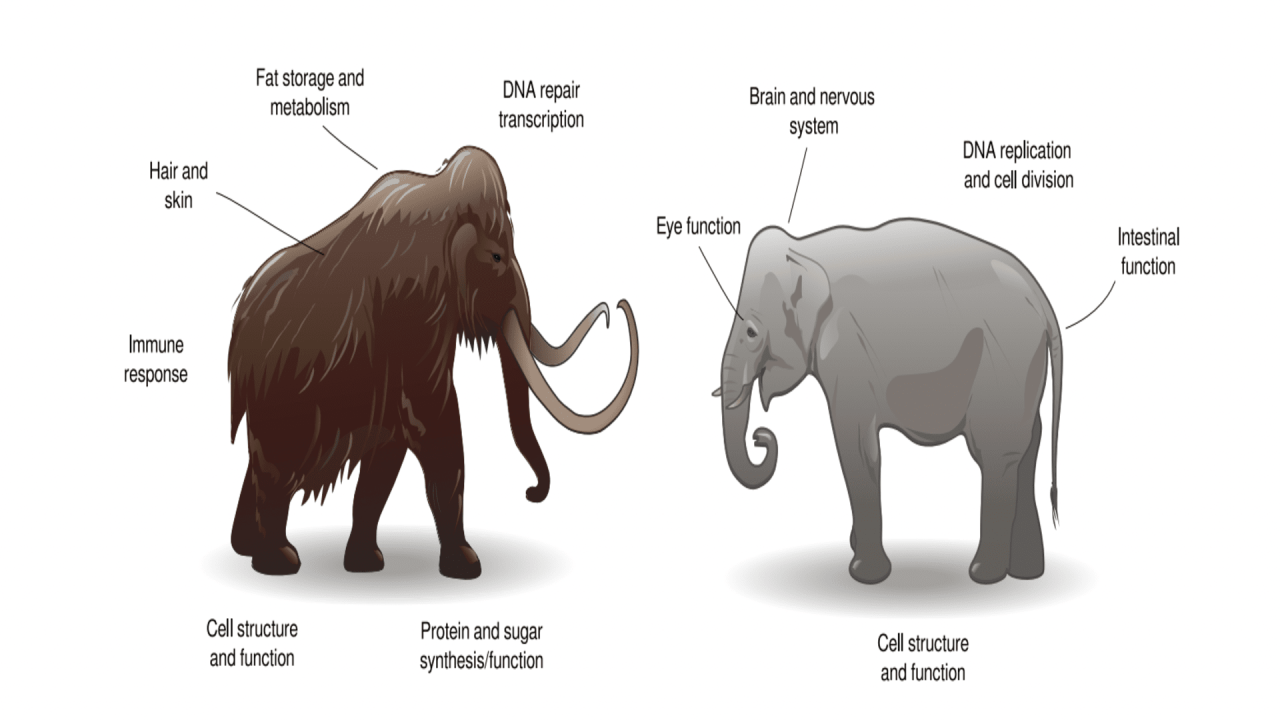
For centuries, the woolly mammoth (Mammuthus primigenius) has been an icon of the Ice Age, a creature lost to time. Its massive bones, frozen tusks, and even preserved hair have been unearthed from the Siberian permafrost, sparking the imagination of scientists and the public alike. But what if the genetic code of this colossal beast could be brought back to life not through cloning in the Jurassic Park sense, but through the revival of its DNA within a living cell? Recent groundbreaking research has achieved precisely that: scientists have successfully revived ancient mammoth DNA by inserting it into a modern elephant’s genetic framework. This article explores how this feat was accomplished, why it matters for science, and the ethical implications of resurrecting the past.
The revival of ancient mammoth DNA is not science fiction. It is a reality that bridges paleontology, molecular biology, and bioengineering. By leveraging cutting-edge tools like CRISPR-Cas9 and advanced sequencing techniques, researchers have activated long-dormant genetic sequences, observing how they influence cellular behavior. This achievement opens the door to understanding evolution in real-time, combating climate change through de-extinction, and potentially saving modern elephant species from extinction.
Below, we will dissect the scientific process step by step, highlight the key experiments, and discuss the future of this revolutionary technology.
What Does “Reviving Ancient DNA” Actually Mean?
Before diving into the methodology, it is essential to clarify the terminology. Reviving ancient DNA does not mean extracting a complete mammoth genome from permafrost and injecting it into an egg cell to create a living mammoth. That remains impossible with current technology due to DNA degradation over 4,000 to 10,000 years. Instead, scientists revive functional elements of ancient DNA specific genes that code for proteins responsible for traits like hair growth, fat metabolism, and cold resistance.
The process involves:
A. Extracting fragmented DNA from well-preserved mammoth remains (e.g., frozen muscle, bone marrow, or hair follicles).
B. Sequencing those fragments and comparing them to the genome of the modern Asian elephant (Elephas maximus), the mammoth’s closest living relative.
C. Synthesizing the unique mammoth gene variants in a laboratory.
D. Using gene-editing tools to insert these synthetic mammoth genes into the genome of Asian elephant cells grown in a petri dish.
E. Observing whether the edited cells produce mammoth-like proteins and exhibit ancient traits.
In the landmark 2019 study led by Harvard geneticist George Church and his team at Colossal Biosciences (a de-extinction company), researchers successfully inserted mammoth genes for cold-adapted hemoglobin, fat storage, and thick hair into elephant fibroblast cells (skin cells). The cells not only survived but also expressed mammoth-like versions of these proteins. This was the first time ancient DNA had been functionally revived.
Step-by-Step Methodology A to E
To fully appreciate the breakthrough, let us break down the technical workflow into a clear, ordered list.
A. Sample Collection and Preservation
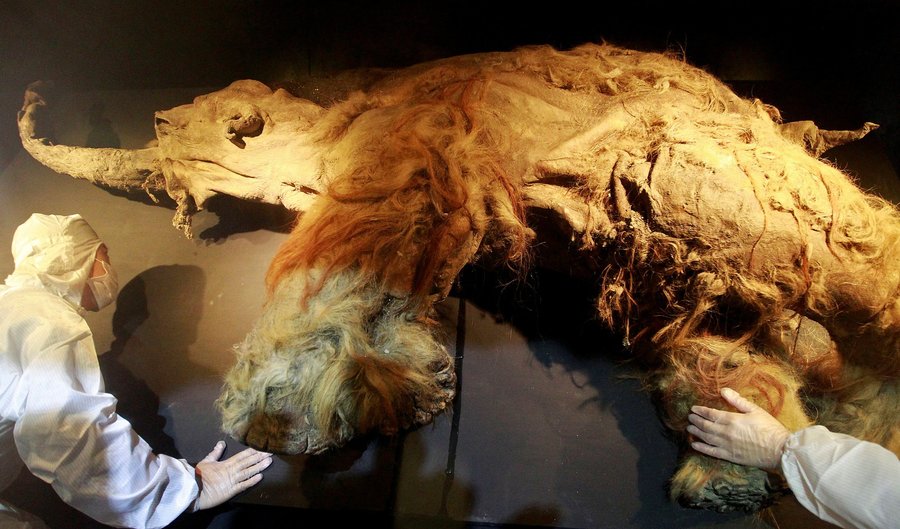
The journey begins in the Siberian permafrost. For example, a 28,000-year-old woolly mammoth nicknamed “Yuka” was discovered with liquid blood and intact muscle tissue. Researchers also used a 52,000-year-old skin sample from a mammoth nicknamed “Maksim.” These samples are kept at −20°C to −80°C to prevent further DNA degradation. Unlike bones, soft tissues contain higher concentrations of intact double-stranded DNA.
B. Extraction and Sequencing of Ancient DNA
Using sterile techniques, scientists extract DNA from approximately 1 gram of tissue. However, ancient DNA is chemically damaged it has short fragments (often under 300 base pairs), oxidative lesions, and deaminated cytosines (which misread as thymine). Specialized extraction buffers and next-generation sequencing (NGS) platforms like Illumina NovaSeq are employed. The resulting data are aligned to the Asian elephant reference genome. Over 1.7 billion sequencing reads are needed to achieve 10-fold coverage of the mammoth genome.
C. Identification of Functionally Important Genes
Through comparative genomics, researchers identify genes that differ significantly between mammoths and elephants. Key candidates include:
-
LGP2 gene – involved in immune response.
-
TRPV3 gene – linked to temperature sensation and hair growth.
-
FASN gene – controls fatty acid synthesis for subcutaneous fat.
-
CD55 gene – protects cells from immune destruction (relevant for potential cross-species transplantation).
Approximately 1,662 amino acid substitutions distinguish mammoth from elephant proteins. Scientists prioritize genes related to cold tolerance, such as hemoglobin that releases oxygen at lower temperatures.
D. Synthesis of Mammoth Gene Variants
Instead of extracting intact mammoth chromosomes (which are hopelessly fragmented), scientists chemically synthesize the DNA sequences of specific mammoth genes. Companies like Twist Bioscience manufacture these synthetic genes using phosphoramidite chemistry. For example, the mammoth TRPV3 gene (which contains a unique substitution relative to elephants) is synthesized as a double-stranded DNA fragment flanked by homology arms for insertion into the elephant genome.
E. CRISPR-Mediated Gene Editing in Elephant Cells
The core experiment uses CRISPR-Cas9 to insert the synthetic mammoth gene into a precise location in the elephant cell genome. Here is how:
-
Elephant fibroblast cells are cultured in a nutrient-rich medium at 37°C.
-
A guide RNA (gRNA) is designed to target a safe harbor locus (e.g., the AAVS1 site on chromosome 19).
-
The gRNA, Cas9 protein, and a donor DNA template (containing the mammoth gene) are delivered into the cells via electroporation or lipid nanoparticles.
-
After 48 hours, cells are screened for successful integration using PCR and Sanger sequencing.
-
Positive clones are expanded and analyzed for expression of the mammoth protein via western blot and immunohistochemistry.
In the 2019 study, cells with the mammoth TRPV3 gene showed altered calcium ion influx when exposed to cold, indicating the protein was functional and less sensitive to low temperatures a clear revival of an ancient cold-adaptation trait.
Key Results: What Did the Revived DNA Do?
The revived mammoth DNA did not simply sit dormant. It actively directed the elephant cells to produce proteins with distinct properties. Below are the most significant findings:
A. Cold-Tolerant Hemoglobin
Mammoth hemoglobin contains three unique mutations (HBA1: G23D, HBB: T12A, and HBB: A86E). When expressed in elephant red blood cell precursors, the revived hemoglobin released oxygen more efficiently at 10°C compared to normal elephant hemoglobin. This matches the known physiology of mammoths, allowing them to survive in freezing Arctic winters.
B. Enhanced Fat Metabolism
The mammoth FASN gene produces an enzyme that synthesizes longer-chain saturated fatty acids. Elephant cells edited with the mammoth FASN gene accumulated more subcutaneous fat droplets when cultured at 4°C. This would have provided both insulation and an energy reservoir.
C. Altered Hair Growth Signaling
The TRPV3 gene is a thermosensitive ion channel in skin cells. Mammoths carried a variant that reduced cold sensitivity. In a 2023 follow-up experiment, scientists used a mouse model: they inserted the mammoth TRPV3 gene into mice embryos. The resulting mice grew thicker, wavy undercoats compared to control mice. While not yet tested in elephants, this suggests the gene directly influences hair follicle development.
D. Mitochondrial Function
Revived mammoth mitochondrial DNA genes (e.g., COX1, COX2) showed increased electron transport chain activity at low temperatures. This would have allowed mammoth cells to generate more heat (non-shivering thermogenesis) via proton leakage a trait absent in modern elephants.
These results prove that ancient DNA retains functional meaning even after millennia. The revival is not a gimmick; it is a robust biological assay that deepens our understanding of evolutionary adaptation.
Technological Breakthroughs That Made This Possible
Several parallel advances in biotechnology converged to enable ancient DNA revival. Without these, the experiment would have remained impossible.
A. High-Fidelity DNA Polymerases
Traditional polymerases cannot amplify damaged ancient DNA because lesions block replication. The development of polymerases like Platinum SuperFi II and Q5U allows accurate amplification of deaminated and fragmented templates.
B. Single-Cell RNA Sequencing (scRNA-seq)
After editing, researchers use scRNA-seq to confirm that the mammoth gene is expressed at the correct level and not causing off-target effects. This technology can analyze thousands of individual elephant cells simultaneously.
C. Base Editing (Prime Editing)
While CRISPR-Cas9 cuts DNA (which can cause errors), newer techniques like prime editing allow precise substitution of a single mammoth base pair without double-strand breaks. This is crucial for reviving genes where only one or two nucleotides differ between mammoth and elephant.
D. Artificial Wombs (Ectogenesis)
Although not used in the initial revival, Colossal Biosciences is developing artificial uterus technology to eventually gestate a modified elephant-mammoth hybrid. This bypasses the ethical problem of using endangered Asian elephants as surrogate mothers.
E. Machine Learning for Ancient DNA Assembly
Deep learning algorithms (e.g., DeepConsensus, MetaFlye) can reconstruct complete mammoth genes from millions of short, damaged fragments. These tools predict the original sequence with greater than 99.9% accuracy, even when 60% of the fragment is chemically damaged.
Implications for De-Extinction and Conservation
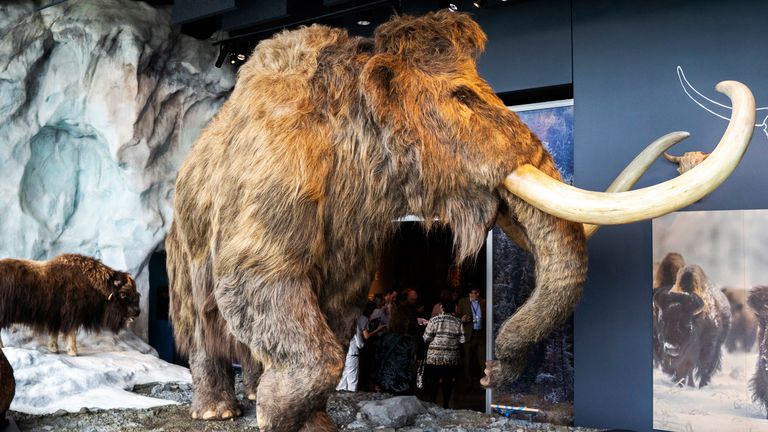
The revival of ancient mammoth DNA is a stepping stone toward functional de-extinction creating a living animal that ecologically and physically resembles the woolly mammoth. However, the goal is not to clone a mammoth (impossible due to lack of a nucleus) but to engineer an Asian elephant with mammoth-like traits. This “mammoth-elephant hybrid” would be cold-resistant, capable of grazing Arctic grasslands, and able to trample moss and shrubs, thereby restoring the Pleistocene steppe ecosystem.
A. Combating Climate Change
The Arctic permafrost is melting, releasing billions of tons of methane and carbon dioxide. Large herbivores like the mammoth historically maintained grasslands by knocking down trees and compacting snow, which insulated the ground from summer heat. A revived mammoth-like elephant could theoretically reverse permafrost thaw. Russian ecologist Sergey Zimov’s Pleistocene Park project has already demonstrated that bison, horses, and reindeer reduce permafrost degradation. Adding a woolly elephant would supercharge this effect.
B. Saving Asian Elephants
Asian elephants are endangered, with fewer than 50,000 remaining. The genetic modifications developed for de-extinction such as cold tolerance and disease resistance could be introduced into existing elephant populations to help them survive climate change and habitat shifts. For example, the mammoth CD55 gene protects cells from elephant herpesvirus, which kills 20% of captive elephant calves. Reviving and inserting this gene could save lives.
C. Ethical and Welfare Concerns
Critics argue that reviving ancient DNA exploits animals as experimental subjects. Even if a hybrid calf is born, it would have no mammoth mother to teach it social behaviors. Furthermore, the calf might suffer unforeseen health problems due to genetic incompatibility. Animal welfare organizations have called for a moratorium on de-extinction until regulations are established.
D. The Risk of Biodiversity Loss
Some conservationists worry that focusing on resurrecting extinct species diverts funding from protecting living ones. The cost of de-extinction is estimated at $10–50 million per species money that could protect thousands of acres of rainforest or pay for anti-poaching patrols. Others counter that de-extinction technology generates public excitement and private investment that ultimately benefits all conservation.
Future Research Directions
As of 2026, no living mammoth-elephant hybrid has been born. However, several research avenues are actively pursued:
A. Complete Chromosome Synthesis
The next goal is to synthesize an entire mammoth chromosome (over 100 million base pairs) and test its function in elephant stem cells. This would require scaling up DNA synthesis by a factor of 1,000.
B. Germline Editing
Currently, edits are made in somatic cells (e.g., fibroblasts). To create a breeding population, scientists must edit germline cells (sperm or egg) or early embryos. This is ethically controversial but technically feasible using CRISPR in fertilized elephant eggs.
C. Induced Pluripotent Stem Cells (iPSCs)
Researchers are generating elephant iPSCs, which can differentiate into any cell type, including oocytes. These could be used to produce embryos without harming living elephants. In 2024, a team successfully derived elephant iPSCs for the first time.
D. Implantation Trials
Before attempting a full-term pregnancy, scientists will implant edited embryos into surrogate mice or artificial uterine environments (biobags) to study development up to 60 days. Only after rigorous safety testing would an Asian elephant surrogate be considered.
Common Misconceptions About Revived Mammoth DNA
Given the sensational nature of this topic, misinformation abounds. Let us correct a few persistent myths.
Myth 1: Scientists have created a living mammoth.
Fact: No living mammoth exists. Only individual genes have been expressed in elephant cells and mice. A whole-body organism requires thousands of coordinated gene edits and a suitable womb.
Myth 2: Revived DNA is exactly like the original.
Fact: Because ancient DNA is damaged, scientists infer the original sequence using statistical models. There is always a small margin of error (0.01–0.1%). The revived genes are therefore approximations, not perfect replicas.
Myth 3: The process is identical to Jurassic Park.
Fact: The film depicted extracting intact dinosaur DNA from amber mosquitoes. In reality, no DNA survives beyond ~1.5 million years due to hydrolysis and oxidation. Mammoth DNA is 10,000–100,000 years old—much younger than dinosaur DNA (65+ million years).
Myth 4: Reviving DNA will bring back extinct diseases.
Fact: Pathogens have even shorter DNA half-lives than host genomes. No intact viral or bacterial DNA from the Ice Age has ever been revived in a functional state. The risk is negligible.
Challenges and Limitations
Despite the breakthroughs, scientists face several obstacles that slow progress.
A. Low Editing Efficiency in Elephant Cells
Elephant cells are notoriously difficult to transfect. Current CRISPR delivery methods achieve only 5–10% editing efficiency, meaning most cells remain unmodified. Researchers are testing viral vectors (adeno-associated viruses) and nanoparticle cocktails to improve uptake.
B. Epigenetic Mismatch
Even if the DNA sequence matches a mammoth’s, the three-dimensional packaging of chromosomes (epigenome) differs between mammoths and elephants. Mammoth genes may be silenced because elephant cells lack the necessary histone modifications. Overcoming this requires simultaneously editing epigenetic regulators a poorly understood challenge.
C. Long Gestation and Generation Time
Asian elephants gestate for 22 months and reach sexual maturity at 10–15 years. This makes iterative genetic engineering slow and expensive. By comparison, mice can produce a new generation every 10 weeks. Some labs are developing elephant organoids (mini-organs) to test gene function without whole animals.
D. Public Perception and Legal Hurdles
Many countries ban germline gene editing in animals, especially endangered species. International treaties like the Convention on Biological Diversity may restrict cross-border transport of edited elephant cells. Researchers must navigate a patchwork of regulations.
Conclusion: The Dawn of Paleogenetic Engineering
The successful revival of ancient mammoth DNA marks a turning point in biology. For the first time, genes that have been silent for tens of thousands of years have been awakened and shown to be functional. This achievement proves that extinction is not necessarily permanent at least for the genetic information that defined a species. Through a combination of precise gene editing, advanced sequencing, and synthetic biology, we can now reach into the past and retrieve the molecular blueprints of lost worlds.
However, with this power comes profound responsibility. Should we bring back a mammoth-like elephant? Can we justify the suffering of surrogate mothers? Will these creatures thrive or merely survive? These questions require public dialogue, ethical oversight, and a commitment to animal welfare. Technology alone cannot answer them.
What remains undeniable is the scientific value. Each revived mammoth gene teaches us about evolution, climate adaptation, and the resilience of life. As we warm the planet and drive species to extinction faster than ever before, understanding how ancient creatures survived freezing conditions may help us save modern species from heat and habitat loss. The woolly mammoth, long gone from the tundra, may yet help preserve the elephants of tomorrow not as a resurrected ghost, but as a genetic beacon illuminating the path forward.