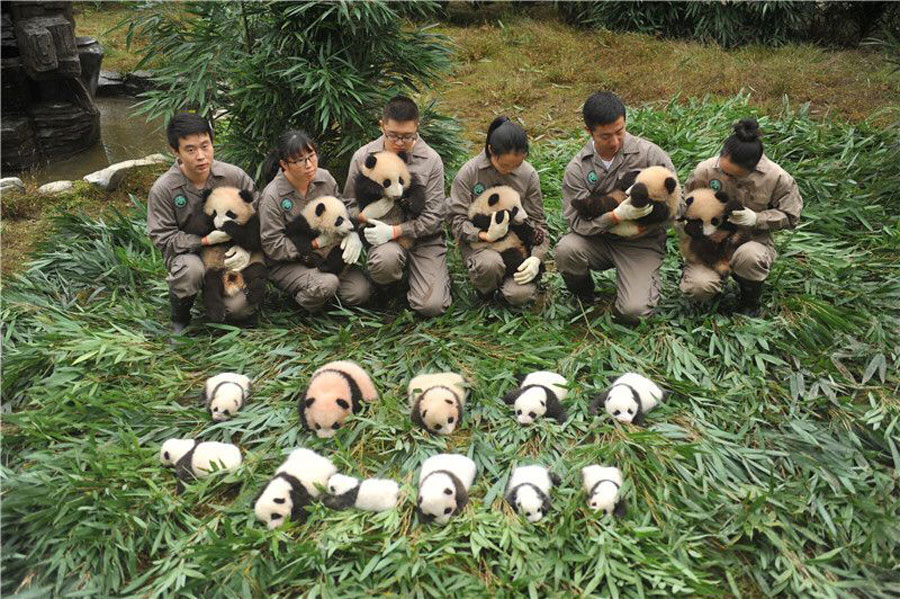
The natural world is full of wonders, but few events capture the human heart quite like the birth of giant panda cubs. These black-and-white ambassadors of wildlife conservation are beloved globally, symbolizing the fragile beauty of our planet’s biodiversity. Among the rarest and most astonishing occurrences in zoological history is the birth of panda triplets. While single births are the norm and twins are a celebrated rarity, the arrival of three healthy cubs from one mother in a controlled environment represents a monumental achievement for science, dedication, and hope. This article delves deep into the extraordinary phenomenon of panda triplets born in captivity, exploring the biological challenges, the heroic efforts of keepers, the intricate hand-rearing techniques, and what this means for the future of an endangered species.
The Rarity of Multiple Births in Giant Pandas
To fully appreciate the miracle of panda triplets, one must first understand the reproductive biology of the giant panda (Ailuropoda melanoleuca). In the wild, giant pandas are notoriously solitary creatures with a very low reproductive rate. This is due to several factors:
-
Short Estrus Cycle: Female pandas are fertile for only 24 to 72 hours each year, typically in the spring.
-
Delayed Implantation: Even after successful mating, the fertilized egg may float freely in the uterus for months before implanting. This means the actual gestation period can vary wildly, from 70 to 180 days.
-
Pseudopregnancy: Females often display signs of pregnancy (nesting, appetite changes) without actually carrying a fetus, making confirmation difficult.
-
Small Litter Size in the Wild: The overwhelming majority of wild panda births are singletons. The mother’s milk is low in fat and protein, and she can typically only care for one cub effectively. Twins are rare; triplets in the wild are virtually unknown and would almost certainly not survive due to the mother’s inability to nurse and protect three infants simultaneously.
In captivity, these challenges are magnified by stress and artificial environments. However, through decades of research, Chinese breeding centers such as the Chengdu Research Base of Giant Panda Breeding and the China Conservation and Research Center for the Giant Panda (CCRCGP) in Wolong have refined techniques to encourage mating and increase cub survival rates. Even with these advances, triplet births remain a statistical anomaly, occurring in less than 1% of all captive panda pregnancies.
Historical Cases of Panda Triplets
To date, there have been only a handful of confirmed cases of giant panda triplets born in captivity worldwide. The most famous and successful example is the 2014 birth at the Chimelong Safari Park in Guangzhou, China. The mother, a panda named Juxiao, gave birth to three cubs one female and two males. What made this event so groundbreaking was not just the birth itself, but the survival of all three cubs past the critical neonatal period. Prior to this, triplet births often resulted in the death of one or two cubs within days due to neglect or lack of resources.
Other instances, such as a triplet birth in Japan’s Adventure World in Shirahama in the early 2000s, sadly saw limited survival. The Chimelong event set a new global standard for panda neonatology and hand-rearing. More recently, in 2021, another set of triplets was born at the same Chimelong Safari Park, proving that the techniques developed had been successfully refined and replicated. These births are not mere curiosities; they are living proof that human intervention, when applied with scientific rigor, can tip the scales for a species on the brink.
Why Are Triplets So Dangerous for Mother and Cubs?
The birth of triplets is a high-stakes medical event. Unlike a litter of kittens or puppies, panda cubs are born extremely altricial—meaning they are underdeveloped, blind, hairless, and utterly dependent. A newborn panda weighs only 1/900th of its mother’s weight (roughly 100-200 grams, or the size of a stick of butter). Compare this to a human newborn, which is about 1/20th of the mother’s weight. The mother’s body is taxed to its absolute limit.
Here are the primary dangers associated with panda triplets:
A. Maternal Rejection
A mother panda has only two nipples that produce milk. She instinctively knows she cannot feed three cubs. Consequently, she will often choose the strongest one or two and abandon or even accidentally crush the third. In the wild, this is a brutal but necessary survival strategy.
B. Low Birth Weight and Weakness
In a triplet pregnancy, the mother’s limited resources are divided among three fetuses. This almost always results in one or more cubs being significantly underweight. Underweight cubs have weaker immune systems, poorer suckling reflexes, and are more prone to hypothermia.
C. Crushing Risk
A mother panda, despite her gentle image, is a large animal (up to 150 kg / 330 lbs). She moves slowly and often sits or rolls over. Newborn cubs cannot move away quickly. In an enclosure, a mother trying to care for three squirming infants is at high risk of inadvertently crushing one.
D. Milk Supply and Nutrition
A panda mother’s milk changes composition over time. In the first few days, she produces colostrum, rich in antibodies. However, her volume is only sufficient for one, maybe two, cubs. A third cub will suffer from starvation and lack of passive immunity, leading to sepsis or organ failure within 72 hours if not supplemented.
The Miracle of Captive Rearing: How Keepers Save Triplets
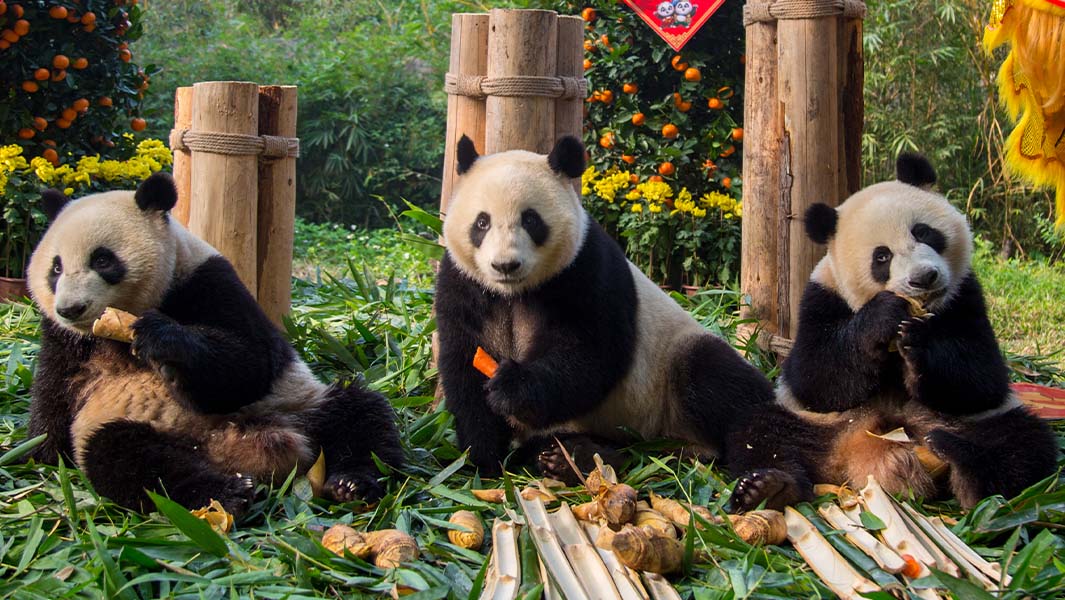
The survival of panda triplets is not a passive event. It requires a round-the-clock, military-precision operation involving veterinarians, nutritionists, and experienced keepers. The goal is to mimic the mother’s care while compensating for her biological limitations. The process can be broken down into six critical phases:
Phase 1: Immediate Separation and Assessment
Within minutes of the third cub’s birth, the team makes a critical decision: will the mother keep any? Usually, the keepers will allow the mother to keep one or two cubs to stimulate her maternal hormones (prolactin) and to allow those cubs to receive natural colostrum. The remaining cub(s) are immediately removed to an incubator. Each cub is weighed, measured, checked for reflexes, and given a unique identifier (usually a small, non-toxic color mark).
Phase 2: The Incubator and Thermal Regulation
A newborn panda cannot regulate its own body temperature for the first two weeks. The incubator is set to a precise temperature (initially 36-37°C / 96.8-98.6°F) with 90-95% humidity. The cubs are placed on soft, washable padding that mimics fur. Keepers rotate the cubs’ positions hourly to prevent pressure sores and to ensure even warmth.
Phase 3: Hand-Feeding with Formula
This is the most labor-intensive part. Since the mother cannot produce enough milk for three, keepers use a specialized formula designed to mimic panda milk. It is extremely high in fat (approx. 25%) and protein.
-
First 7 days: Feeding every 2 hours, 24/7. Each feeding session for one cub takes 15-20 minutes using a tiny, sterile syringe or a specialized panda nipple. Keepers must stimulate the cub to suckle by gently stroking its mouth.
-
Weeks 2-4: Feeding intervals extend to every 3 hours, but the volume increases. The cubs’ eyes begin to open around day 40.
-
Weeks 5-8: The cubs start to develop fur, and the characteristic black patches appear. Keepers begin to introduce a “panda puppet” – a glove painted to look like a panda’s face – during feeding to prevent the cubs from imprinting on humans.
Phase 4: Rotating with the Mother
Modern best practice now advocates for “cub rotation.” Instead of removing all triplets permanently, keepers will swap the cubs every few hours. Cub A and B stay with mom; Cub C is in the incubator. After 4 hours, Cub C goes to mom, and Cub A comes out. This achieves three goals:
-
The mother’s nipple stimulation continues, maintaining her milk production.
-
All cubs receive some natural milk and maternal antibodies.
-
The cubs learn the smell and sound of their real mother, which is essential for later reintroduction.
Phase 5: Health Monitoring and Stimulation
Newborn pandas cannot urinate or defecate on their own for the first few weeks. In nature, the mother licks their abdomen and genital area to stimulate excretion. Keepers must replicate this using a warm, damp cotton ball, gently massaging the area after every feeding. Any sign of constipation, diarrhea, or weight loss (even 1 gram) triggers an immediate veterinary review. Daily blood tests check for infections and organ function.
Phase 6: Milestone Tracking
Survival is measured in grams and days. Key developmental milestones include:
-
Day 15: Umbilical cord falls off.
-
Day 30: Hearing develops.
-
Day 45: Eyes fully open (initially blue-grey, turning black later).
-
Day 60: First attempts at crawling.
-
Day 90: Baby teeth emerge.
-
Day 120: Able to sit up.
-
Day 180 (6 months): Introduction to bamboo shoots.
Case Study: The Chimelong Triplets (2014)
The most documented success story is the trio born on July 29, 2014, at Chimelong Safari Park. The mother, Juxiao, was an experienced but older panda. When the first cub was born, keepers were thrilled. Ten minutes later, a second arrived shock. Then, a third emerged. The largest cub weighed 153 grams (5.4 oz), the smallest a mere 83 grams (2.9 oz) the size of a small egg.
The keepers implemented an aggressive rotation system. The weakest cub (nicknamed “Little Egg”) required tube-feeding for the first 48 hours because its suckling reflex was absent. For 90 days, a team of 12 keepers worked in 8-hour shifts. They named the cubs Meng Meng, Shuai Shuai, and Ku Ku – roughly translating to “Cute,” “Handsome,” and “Cool.”
By day 100, all three had surpassed 5 kg (11 lbs). The smallest, Ku Ku, caught up in weight by month five. Today, these pandas are healthy adults, and one has even gone on to breed. This case proved that with enough resources, triplet survival is possible.
Long-Term Challenges and Ethical Considerations
While the birth of triplets is cause for celebration, it also raises complex questions for conservationists.
Genetic Diversity Concerns
A single mother producing triplethsires is statistically impressive, but if those triplets are from the same parents, they do not add significantly to the genetic diversity of the captive population. The goal of captive breeding is not just numbers, but a healthy, diverse gene pool. Too many siblings breeding within a small population can lead to inbreeding depression.
Resource Allocation
Raising triplets is extraordinarily expensive. The cost of formula, incubators, 24-hour staffing, and veterinary care for 6-12 months can exceed $500,000 USD per triplet set. Critics argue that these funds might be better spent on habitat preservation in the wild, where pandas face illegal logging, infrastructure development, and climate change.
Reintroduction Limitations
Most captive-born pandas, even triplets, will never be released into the wild. They lack the survival skills (avoiding predators, finding water, selecting the right bamboo species) taught by a wild mother. Only a tiny fraction of pandas from breeding centers are selected for a rigorous “wild training” program. The vast majority will remain in captive facilities as a genetic reservoir.
The Zoo vs. Sanctuary Debate
Some animal welfare advocates argue that breeding for triplets is a publicity stunt for zoos and safari parks, driving ticket sales and AdSense revenue (like this article), rather than a genuine conservation necessity. They point out that pandas in the wild live alone, and forcing a mother to undergo triple gestation (which would never happen naturally) causes stress.
The Role of Technology in Panda Triplet Rearing
The survival of panda triplets would be impossible without modern technology. Here are the key innovations:
-
Ultrasound and Hormone Monitoring: Allows keepers to detect a triplet pregnancy early (around day 40-50 of gestation). This gives them time to prepare incubators, extra formula, and additional staff.
-
Infrared CCTV: Cameras inside the birthing den allow keepers to watch the mother and cubs from a separate room. If the mother begins to crush a cub, an alarm can sound, and keepers can intervene within seconds.
-
Digital Weight Scales: Medical-grade scales accurate to 0.1 gram are used at every feeding. Weight gain is the single most important indicator of health.
-
Artificial Milk Formulation: Over 30 years, scientists have perfected a formula that matches the exact macronutrient profile of wild panda milk. This formula now includes prebiotics to support gut health.
What the Future Holds for Captive Panda Triplets
As of 2026, the captive giant panda population stands at over 600 individuals, thanks largely to Chinese breeding programs. The birth of triplets, while still rare, becomes slightly more probable each year as our understanding of panda reproduction deepens. Researchers are now working on:
-
Genetic Markers: Identifying which pandas are genetically predisposed to multiple ovulations, so they can be paired strategically.
-
Non-Invasive Stress Reduction: Using pheromone sprays and environmental enrichment to reduce cortisol levels in pregnant pandas, which may improve cub viability.
-
Cross-Fostering with Wild Nests: A controversial idea where captive-born triplets could be placed under a wild mother who has lost her own cubs. This has never been successfully done with pandas but works with other species.
How You Can Support Panda Conservation
The story of panda triplets is not just a feel-good news item; it is a call to action. If you want to contribute to the survival of this iconic species, consider the following steps:
-
Support Accredited Zoos: Visit and donate to facilities that are part of the World Association of Zoos and Aquariums (WAZA) and have genuine panda conservation programs. Avoid roadside zoos or unlicensed wildlife parks.
-
Adopt a Panda (Symbolically): Many organizations, such as the World Wildlife Fund (WWF) and the Chengdu Panda Base, offer symbolic adoption programs. Your donation goes directly to bamboo forest preservation and veterinary care.
-
Reduce Your Carbon Footprint: Climate change is destroying the high-altitude bamboo forests of Sichuan, Shaanxi, and Gansu provinces. Panda survival ultimately depends on a stable climate.
-
Spread Accurate Information: Share articles like this one, but always verify your sources. Misinformation about pandas (e.g., that they are “evolutionary failures” or that all captive breeding is cruel) harms genuine conservation efforts.
Conclusion: A Symbol of Hope, Not a Guarantee
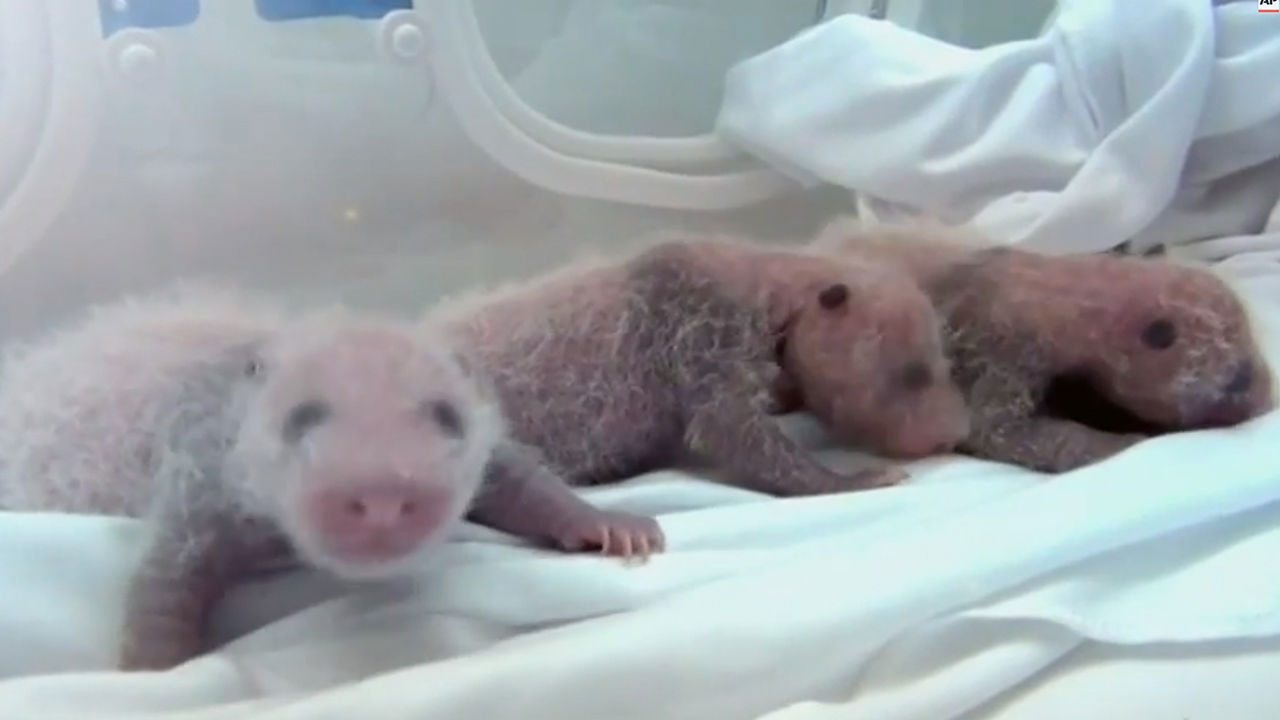
The birth of panda triplets in captivity is nothing short of a modern zoological miracle. It represents the pinnacle of decades of painstaking research, sleepless nights for keepers, and a global commitment to preventing the extinction of one of nature’s most beloved creatures. From the precarious first hours in an incubator to the triumphant moment the three cubs take their first clumsy bites of bamboo, every step is a testament to human dedication.
However, it is crucial to remember that triplets are a symptom of success, not the definition of it. True success will be measured not by how many pandas live in zoos, but by the day when wild panda populations are so robust that triplets born in the mountains of China can survive without human help. Until then, each set of triplets each tiny, pink, helpless cub that grows into a powerful black-and-white adult serves as a living, breathing ambassador. They remind us of what we stand to lose, and what we can achieve when we choose to act as stewards rather than destroyers of the natural world.
So the next time you see a viral video of three fuzzy panda cubs tumbling over each other in a breeding center, pause and appreciate the hidden drama. Behind that adorable scene is a silent army of scientists, a mother doing her best, and three tiny warriors fighting against incredible odds. That is the true story of panda triplets born in captivity.