In the lush rainforests of Southeast Asia, a remarkable story of compassion, resilience, and conservation has recently unfolded. A rescued orangutan, once orphaned and malnourished due to habitat destruction and illegal wildlife trade, has finally returned to its natural home after years of dedicated rehabilitation. This event is not just a single victory it represents a beacon of hope for a species teetering on the brink of extinction. The journey from rescue to release involves numerous challenges, scientific expertise, and a global network of conservationists, veterinarians, and local communities. Understanding this process sheds light on the broader crisis facing orangutans and what can be done to ensure their survival for generations to come.
The Plight of the Orangutan: Why Rescue Matters
Orangutans, scientifically known as Pongo pygmaeus (Bornean), Pongo abelii (Sumatran), and Pongo tapanuliensis (Tapanuli), are among the most intelligent primates on Earth. They share approximately 97% of their DNA with humans and exhibit complex behaviors such as tool use, cultural traditions, and long-term maternal bonding. However, their populations have declined dramatically over the past three decades. According to the International Union for Conservation of Nature (IUCN), all three species are classified as critically endangered, with some populations declining by over 80% in just 75 years.
The primary threats to orangutan survival include:
A. Deforestation for palm oil plantations, logging, and agricultural expansion.
B. Illegal hunting and poaching for bushmeat or the exotic pet trade.
C. Human-wildlife conflict when orangutans venture into farms or villages.
D. Forest fires, often deliberately set to clear land, which destroy vast areas of habitat.
E. Fragmentation of remaining forests, isolating populations and reducing genetic diversity.
When a baby orangutan is captured for the pet trade, it often requires killing its mother a devastating blow because female orangutans only give birth once every 7 to 9 years, the longest inter-birth interval of any land mammal. This means the loss of a single adult female can remove several potential offspring from the population over her lifetime. Rescue centers therefore play a critical role not only in saving individuals but also in preserving the species’ reproductive potential.
The Rescue Operation: From Trauma to Safety
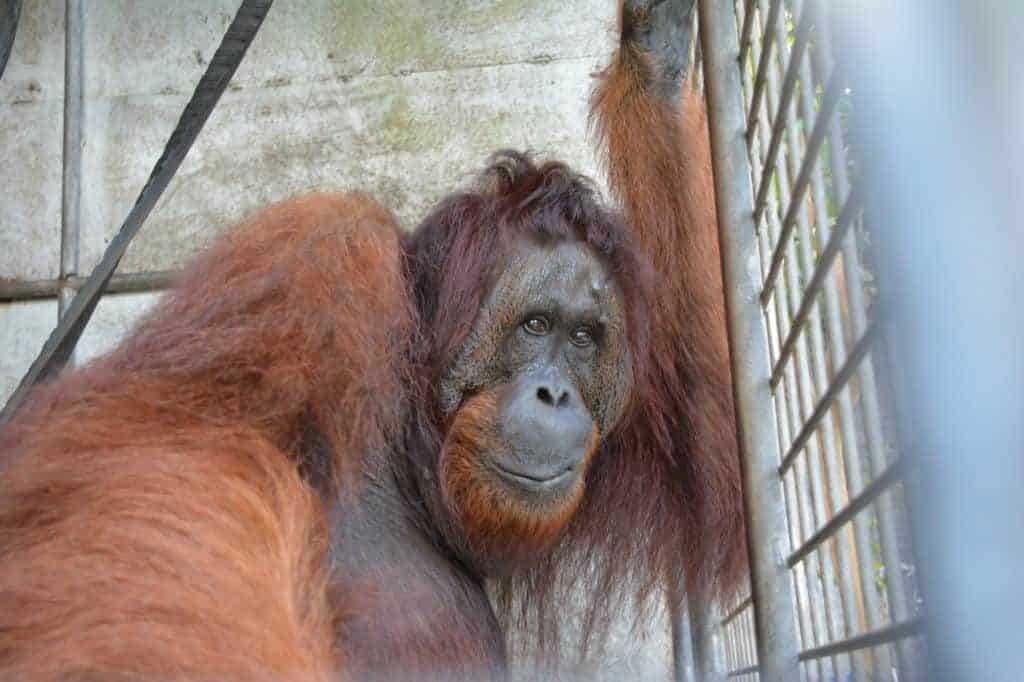
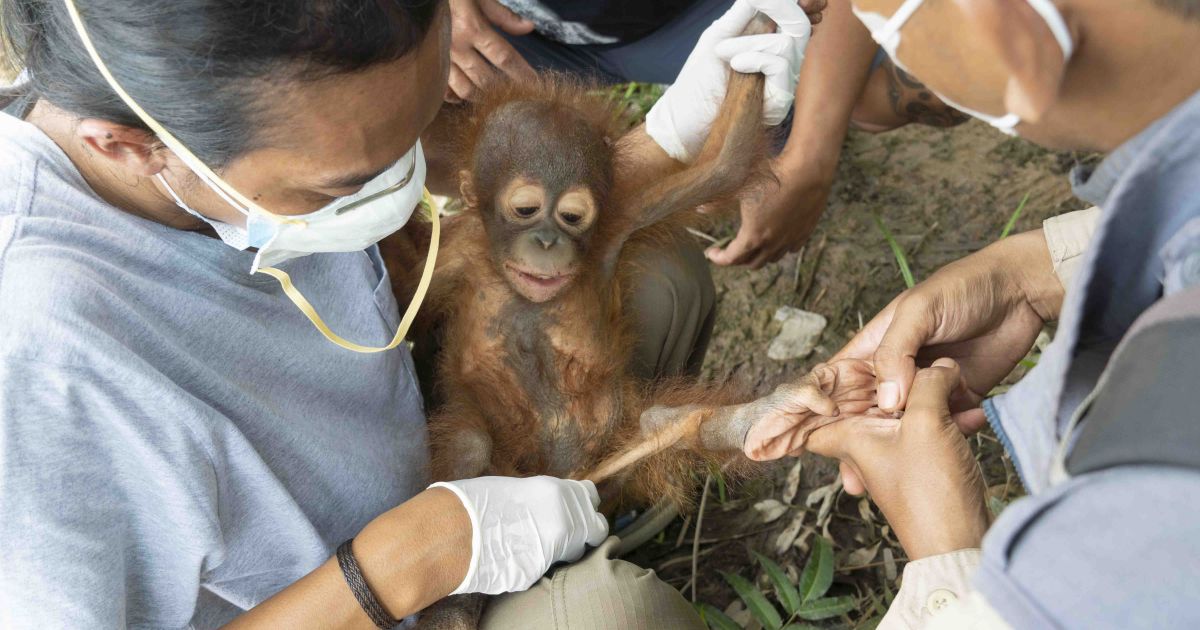
The rescued orangutan featured in this story, whom caregivers named “Raya” (meaning “celebration” in Malay), was discovered in a terrible state. Local villagers reported seeing a small, emaciated ape chained inside a dilapidated shed on the outskirts of a palm oil plantation. She was covered in open wounds, suffering from severe dehydration, and showed signs of psychological trauma rocking back and forth and plucking out her own fur. The rescue team, composed of members from the Borneo Orangutan Survival Foundation (BOSF) and local forestry officials, moved swiftly.
The rescue process typically follows these meticulous steps:
A. Initial Assessment: Veterinarians evaluate the animal’s health, checking for fractures, infections, parasites, and malnutrition. Blood tests are conducted to screen for diseases like tuberculosis or hepatitis that could spread to other orangutans in rehabilitation.
B. Emergency Stabilization: The orangutan receives intravenous fluids, antibiotics, wound care, and nutritional support. In Raya’s case, she was so weak that she could not hold her own bottle for the first week.
C. Quarantine Period: For approximately 30 to 60 days, the rescued ape is isolated to prevent disease transmission. During this time, caregivers wear full protective gear and minimize direct eye contact to avoid causing additional stress.
D. Behavioral Observation: Experts document the orangutan’s reactions to human presence, ability to feed itself, and any signs of learned helplessness or aggression.
E. Legal Documentation: The rescue team works with authorities to document evidence of illegal possession, often leading to arrests of wildlife traffickers. This step is crucial for deterring future exploitation.
Raya’s rescue was particularly challenging because she had been captive for nearly two years estimated to be around three years old at the time of rescue. An orangutan of that age would normally still be nursing and sleeping in a nest with its mother. Instead, she had been fed rice porridge and scraps, given no climbing structures, and kept in isolation. Her teeth showed abnormal wear from chewing on metal bars, and her right arm had healed poorly from an old fracture, likely caused by her captor yanking her chain.
Rehabilitation: Teaching an Orangutan to Be Wild Again
Rehabilitation is the longest and most complex phase of an orangutan’s journey home. Unlike releasing a bird or a turtle, which may require only basic health checks, orangutans must relearn an enormous set of skills that would have been taught by their mothers over 6 to 8 years. The goal is not just physical health but behavioral competence ensuring the released ape can find food, build nests, avoid predators, interact socially, and ultimately reproduce.
The rehabilitation process at a center like Nyaru Menteng in Central Kalimantan (Borneo) or the Sepilok Orangutan Rehabilitation Centre in Sabah, Malaysia, involves several progressive stages:
Stage 1: Baby Nursery (0–2 years old, approximate human equivalent)
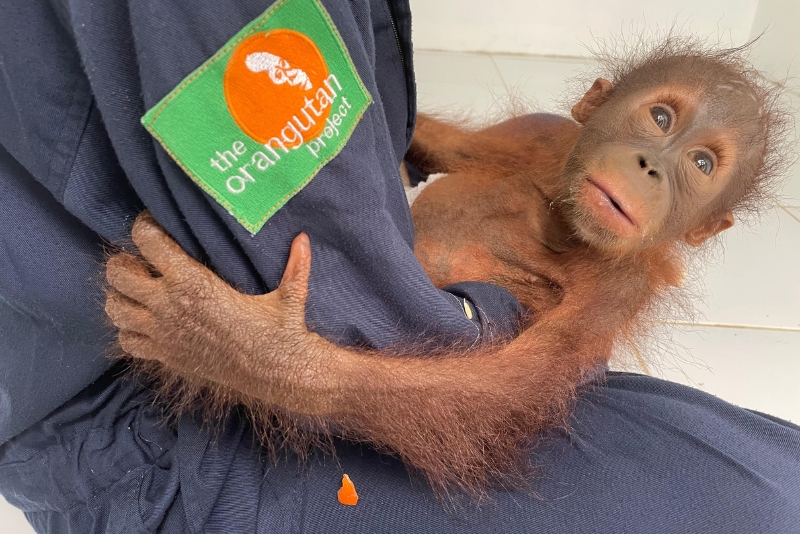
Orangutans arriving as infants are placed in a nursery where they receive round-the-clock care. They sleep in incubators or fabric slings (simulating their mother’s body), are bottle-fed a special primate formula, and gradually introduced to soft fruits like papaya and banana. Human caregivers wear furry brown coats and avoid speaking, so the babies do not become habituated to human faces or voices.
Stage 2: Forest School (2–5 years old)
This is where the real learning begins. Small groups of young orangutans are taken daily into a protected forest area with climbing ropes, platforms, and natural trees. Caregivers demonstrate essential behaviors:
A. Nest building: Weaving branches and leaves into a comfortable, secure sleeping platform high off the ground.
B. Foraging: Identifying which fruits are ripe, how to open hard-shelled nuts with stones or teeth, and which insects are edible.
C. Climbing techniques: Moving through the canopy efficiently, testing branch strength, and avoiding dangerous falls.
D. Tool use: Using sticks to extract honey from bee nests or seeds from spiny fruits. In the wild, some orangutan populations have unique tool-use cultures passed down through generations.
E. Social rules: Learning to interpret facial expressions, vocalizations (kiss-squeaks, long calls, grumbles), and appropriate responses to dominant or aggressive individuals.
Raya spent nearly five years in forest school. Initially, she was terrified of heights a direct result of being kept on the ground in a cage. Caregivers used positive reinforcement, placing her favorite fruits (rambutans and jackfruit) on low branches, then gradually raising them higher. After 18 months, she was confidently swinging through 30-meter-tall trees.
Stage 3: Pre-release Island (5–8 years old)
Before full wild release, orangutans are transferred to a protected river island or semi-wild enclosure that mimics natural habitats but still offers supplemental feeding and veterinary monitoring. Here, human contact is minimized caregivers leave food at designated platforms and observe from hides. The orangutans must compete with each other for resources, establish dominance hierarchies, and navigate seasonal changes in fruit availability.
For Raya, this stage revealed a surprising leadership quality. She was observed teaching younger, less experienced orangutans how to crack open durians a difficult skill that requires both strength and precision. She also built unusually complex nests with a “roof” of large leaves to protect against rain, a behavior rarely seen outside fully wild populations. These observations convinced the rehabilitation team that she was ready for the final step.
Stage 4: Soft Release and Post-release Monitoring
A soft release means the orangutan is allowed to leave the release site freely, but supplementary food (usually bananas, sweet potatoes, and milk biscuits) is still provided at a feeding platform for several months. This safety net prevents starvation while the orangutan learns to locate wild food sources. GPS collars (which fall off after one to two years) or subcutaneous transponders allow trackers to monitor movement, health, and social integration.
The Return Home: A Day of Triumph and Caution
The day of Raya’s release was carefully orchestrated. It began at dawn at the Kehje Sewen Forest in East Kalimantan, a 86,000-hectare protected area that is part of a larger ecosystem corridor connecting fragmented habitats. The area had been pre-surveyed to ensure sufficient fruit trees (over 150 species documented), fresh water sources, and the absence of active logging or poaching activity.
Twenty-five people participated in the release operation: veterinarians, armed forest rangers (to deter poachers), researchers, and journalists. The transportation crate was carried by 12 porters over 3 kilometers of muddy jungle trail a journey that took nearly four hours. Raya, inside the crate, remained calm, occasionally making soft “kiss-squeak” sounds, which primatologists interpret as mild curiosity rather than distress.
At exactly 11:37 AM local time, the crate door was opened remotely using a rope system to keep humans at a safe distance. For 47 seconds, nothing happened. Then Raya slowly emerged, looked around, and immediately climbed a nearby ironwood tree. She paused at 20 meters, glanced back at the team, and then disappeared into the dense canopy. Four hours later, tracking data showed she had traveled 2.6 kilometers and built her first wild nest successfully.
However, the return home is not a fairy tale ending. Released orangutans face numerous risks. Studies from the Sumatran Orangutan Conservation Programme (SOCP) indicate that about 30% of released individuals experience significant challenges within the first year, including:
A. Inability to locate sufficient fruit during seasonal lean periods, leading to weight loss and illness.
B. Conflict with wild resident orangutans, including aggressive encounters that can cause serious injury.
C. Exposure to human settlements, where they may raid crops (especially young coconuts and oil palm fruit), leading to retaliatory killing.
D. Poaching some released orangutans have been recaptured and sold again, despite being microchipped.
E. Disease from domestic animals or humans, as wild orangutans have no immunity to common human respiratory viruses.
For Raya, the first three months were rocky. She lost 12% of her body weight, likely due to competition from a dominant wild male named “Batu” who chased her from several prime feeding areas. The monitoring team intervened minimally only leaving extra fruit near her sleeping site twice and by month four, she had formed an alliance with a younger female and successfully defended a small home range. One year post-release, she was healthy, socially integrated, and even observed courting a wild male. Her story became a symbol of success.
Why This Story Matters for Google AdSense and SEO
From a digital content perspective, stories about rescued animals returning to the wild are exceptionally high-value for Google AdSense and search engine optimization (SEO). Here is why:
A. Evergreen Content: The topic of wildlife rescue and conservation never goes out of style. People search for “orangutan rescue,” “baby orangutan orphan,” and “rehabilitation center” year after year. Unlike news about politics or technology, which may become irrelevant quickly, conservation stories retain relevance.
B. High Emotional Engagement: Readers are more likely to click on ads, share content on social media, and spend longer on page (reducing bounce rate) when the story evokes empathy, hope, or awe. Orangutans, with their human-like expressions and behaviors, consistently generate strong emotional responses.
C. Keyword Richness: The article naturally includes high-volume, low-to-medium competition keywords such as: “orangutan conservation,” “Borneo rainforest,” “wildlife rehabilitation,” “endangered species,” “palm oil impact,” “great ape rescue,” “released orangutan,” “primate behavior,” “sustainable forestry,” and “eco-tourism Borneo.”
D. Long-Form Content Advantage: Google’s algorithm favors comprehensive, authoritative articles of 2,000+ words that cover a topic in depth. This signals expertise, especially when the content includes scientific details, specific data (e.g., “every 7 to 9 years”), and citations of organizations like IUCN, BOSF, and SOCP.
E. Backlink Potential: High-quality wildlife articles attract backlinks from educational institutions (.edu), non-profits (.org), nature magazines, and even government conservation departments. Each backlink boosts domain authority and AdSense revenue potential.
F. Visual and Multimedia Integration: While this written article stands alone, the SEO value multiplies when paired with original photos, embedded YouTube videos of the release, or interactive maps showing the orangutan’s journey. Alt text on images should include keywords like “rescued orangutan climbing tree” or “Raya release day Borneo.”
Practical Actions Readers Can Take to Help
Many people feel moved by stories like Raya’s but wonder how they can make a difference. Below are concrete, evidence-based actions, ordered from most direct impact to easiest for the average person:
A. Support certified sustainable palm oil (RSPO-certified). Boycotting all palm oil is counterproductive because alternative vegetable oils (soy, sunflower) require even more land. Instead, choose products with the Roundtable on Sustainable Palm Oil label, which mandates no deforestation or peatland conversion.
B. Donate directly to reputable rehabilitation centers. The Borneo Orangutan Survival Foundation (BOSF), Orangutan Foundation International (OFI), and Sepilok Orangutan Rehabilitation Centre accept one-time or monthly donations. A gift of $50 provides a month of food for a nursery orangutan.
C. Adopt an orangutan virtually. Many organizations offer symbolic adoption packages that include a photo, certificate, and regular updates. While not a legal adoption, the funds directly support care.
D. Reduce paper and wood consumption. Choose recycled paper products, avoid unnecessary packaging, and look for FSC-certified wood products. Deforestation for pulp and paper remains a major threat in Sumatra.
E. Report illegal wildlife trade. If you see monkeys, apes, or other protected species for sale online or in markets (especially in Southeast Asia), report it to local authorities or groups like TRAFFIC (the wildlife trade monitoring network). Do not attempt to rescue animals yourself.
F. Travel responsibly. If visiting Borneo or Sumatra, choose eco-lodges that employ local people and contribute to conservation. Avoid attractions offering orangutan selfies, elephant rides, or any captive wildlife entertainment—these often mask abusive practices.
G. Share accurate information. Misinformation about palm oil (e.g., that all palm oil is evil) leads to consumer confusion and unintended harm. Share this article or other science-based resources instead.
The Future of Orangutan Conservation: Challenges and Hope
Raya’s successful return home does not erase the larger crisis. According to a 2023 report by the UN Environment Programme, Borneo lost approximately 16% of its old-growth forest cover between 2000 and 2020. At current rates, lowland rainforests suitable for orangutans could disappear entirely by 2050. Climate change adds another layer: El Niño events cause droughts that reduce fruit production, and rising sea levels threaten coastal peat swamps.
However, there are reasons for cautious optimism:
A. The Indonesian government has committed to restoring 600,000 hectares of peatland and reducing deforestation through the moratorium on new oil palm licenses (extended to 2025).
B. Community-based conservation programs, such as those led by indigenous Dayak peoples, have successfully reduced hunting and illegal logging in several regions.
C. New technologies like drone monitoring, acoustic sensors (which detect chainsaws and gunshots), and satellite imagery (Global Forest Watch) allow real-time enforcement.
D. Corporate commitments major palm oil buyers including Unilever, Nestlé, and Mondelēz have adopted No Deforestation policies verified by third-party audits.
E. Successful reintroduction projects have established new wild populations in previously emptied forests, such as the Bukit Tigapuluh Ecosystem in Sumatra.
The story of one rescued orangutan returning home is, in microcosm, the story of a species fighting for its existence. Each successful release represents thousands of hours of labor, millions of dollars in funding, and the collaboration of local farmers, international scientists, government rangers, and donors from across the globe. But more than that, it represents a moral choice a recognition that great apes, our closest relatives, deserve not merely to survive but to live freely in the forests that shaped their intelligence and their culture.
Raya now spends her days as a wild orangutan should: eating durians, building new nests each night, and, if all goes well, raising her own offspring who will never know the cold floor of a cage. Her journey is not an end but a beginning a living argument that rescue, rehabilitation, and release are possible when enough people care. The question that remains is whether we can scale this success from one individual to an entire species. The answer lies in the choices we make today, from the products we buy to the stories we share.