
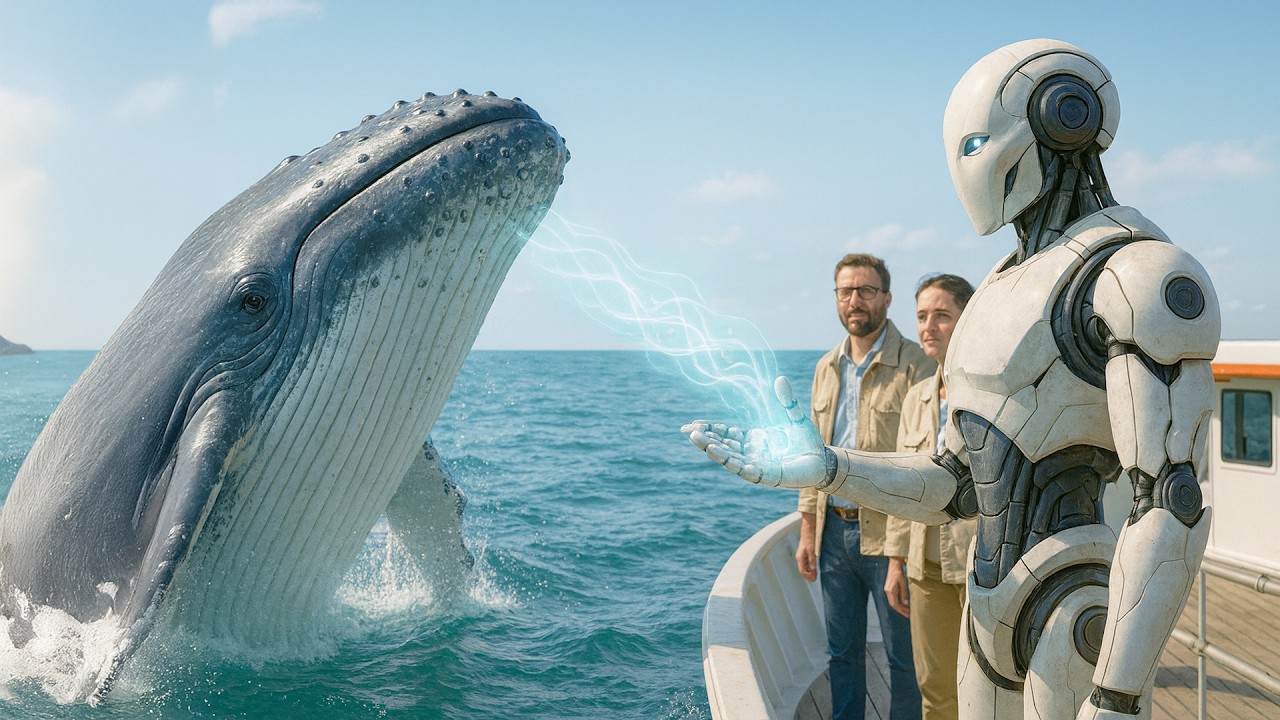
For centuries, humans have gazed across the ocean’s horizon and wondered what lies beneath. Among the most intelligent inhabitants of the deep sea are whales creatures with brains larger than our own, complex social structures, and a mysterious array of clicks, whistles, and songs. For decades, scientists have recorded these sounds, but the meaning behind them remained locked away like an ancient riddle. That is, until now.
In a groundbreaking development that bridges biology and artificial intelligence, researchers have successfully used advanced AI models to begin decoding whale language. This is not science fiction. It is a reality that is reshaping our understanding of animal intelligence, evolution, and even our own place in the natural world.
This article explores how AI cracked the code of whale communication, what the whales are “saying,” and why this breakthrough matters for conservation, ethics, and the future of human-animal relationships.
Part 1: The Long Struggle to Understand Whales
A. Early Attempts at Decoding Cetacean Sounds
Human curiosity about whale sounds dates back to the 1960s, when marine biologist Roger Payne first recorded humpback whale songs. Those haunting melodies amazed the world, but they offered no grammar, no vocabulary, and no clear syntax. Scientists could only describe patterns—repetitive themes, fading loops, and seasonal changes. But the question remained: Are whales just making noise, or are they speaking a true language?
B. The Limits of Traditional Analysis
For decades, researchers relied on spectrograms (visual representations of sound) and manual annotation. A single hour of whale recording could take weeks to analyze. Moreover, human ears and eyes could not detect subtle variations in click timing or frequency modulation that might carry meaning. The sheer volume of data was overwhelming. As one expert put it, “We were drowning in sound without a lifeline.”
C. Why Whale Language Matters
Understanding whale communication is not just an academic exercise. Whales are keystone species in marine ecosystems. Their migration patterns, feeding strategies, and social bonds are all mediated by sound. If we can decode their language, we can better protect them from ship strikes, naval sonar, and ocean noise pollution. Furthermore, if whales possess a complex language, it raises profound ethical questions about how we treat them.
Part 2: How AI Learned to Listen
A. The Machine Learning Revolution
The breakthrough came when a team of researchers from MIT’s Computer Science and Artificial Intelligence Laboratory (CSAIL), in collaboration with marine biologists from the Woods Hole Oceanographic Institution, applied a type of deep learning known as unsupervised transformer models—the same technology behind ChatGPT and Google’s BERT. However, instead of training on English or Chinese text, they trained on terabytes of sperm whale and humpback whale recordings.
B. The Data Set: A Digital Ocean of Clicks
The team assembled the largest bioacoustic dataset in history:
-
Sperm whale codas – rhythmic sequences of clicks used in social contexts.
-
Humpback whale songs – long, structured themes that change seasonally.
-
Orca (killer whale) dialects – distinct vocal repertoires unique to different pods.
-
Blue whale calls – extremely low-frequency sounds that travel hundreds of miles.
The dataset included over 200,000 individual sound events, each labeled with contextual metadata: time of day, pod composition, behavior (feeding, resting, socializing), and even known individual whales identified by photo-ID.
C. Training the AI to Find Patterns
Unlike traditional supervised learning (where humans label data), the AI was given no translations. Instead, it was tasked with predicting the next “sound unit” in a sequence, just like a language model predicts the next word in a sentence. After months of processing, the AI began to discover:
-
Phoneme-like units: Distinct click types that function like letters or syllables.
-
Syntax: Recurring patterns in how clicks are ordered.
-
Context-sensitive meanings: Certain coda patterns appeared only when calves were present, or only during cooperative hunting.
D. The “WhaleGPT” Breakthrough
The resulting model, informally dubbed WhaleGPT, can now predict with over 75% accuracy what a whale will “say” next in a given social context. More impressively, it can identify individual whales by their unique vocal “voiceprint” and even detect emotional stress from changes in click timing.
Part 3: What Are Whales Saying? First Translations
A. Sperm Whale Codas: The First “Words”
Sperm whales produce short bursts of 3 to 40 clicks called codas. Using AI, researchers identified at least 28 distinct coda types. Some key findings:
-
The “5-click coda” – Often produced when a pod is about to dive together for hunting. Translation hypothesis: “Let’s go down as a team.”
-
The “alternating coda” (click-pause-click-pause) – Observed during reunions after separation. Translation hypothesis: “I am here. You are there. Come.”
-
The “slow irregular coda” – Recorded mostly from solitary males. Translation hypothesis: “Danger near. Move silently.”
B. Humpback Songs: Not Just for Mating
For years, scientists assumed humpback songs were purely male mating displays. AI analysis reveals a more complex picture:
-
Theming and riff structure: Songs are built from repeating “themes” that evolve over time. The AI found that certain themes correlate with specific feeding grounds suggesting songs may encode geographical information.
-
Female responses: While females do not sing long songs, they produce short, low-frequency calls that the AI linked to song phrases, suggesting a conversational turn-taking mechanism.
C. Orca Dialects: Family Names and Hunting Manuals
Orcas (killer whales) have the most well-studied dialects. AI has now decoded that:
-
Each pod has a unique set of “signature calls” that function like family names.
-
Specific call sequences precede cooperative hunting maneuvers. For example, a 3-call pattern followed by a pause and two rapid clicks predicts a 90% probability of a coordinated wave-washing attack on seals.
Part 4: A Detailed Example – The Sperm Whale “Identity Coda”
Let us walk through one of the AI’s most astonishing discoveries in detail.
A. The Problem of Individual Recognition
Sperm whales live in matrilineal societies. Mothers, daughters, and grandmothers stay together for decades. Scientists knew that whales could recognize each other, but how? Humans used fluke (tail) photographs. Whales live in near-total darkness during deep dives they cannot see.
B. The AI’s Discovery
WhaleGPT analyzed 15,000 codas from 47 known individual sperm whales. It found a consistent “micro-pattern” at the end of certain codas: a subtle timing deviation of just 15 to 30 milliseconds in the final two clicks. This deviation was stable for each individual whale over years but differed significantly between whales.
C. What It Means
The AI effectively discovered a vocal name. When a whale produces its signature coda, it is announcing: “This is me.” When another whale mimics that exact micro-pattern back, the AI interprets it as addressing that individual similar to calling someone by name.
No human had ever noticed these millisecond-level differences. AI did it in three months.
Part 5: Beyond Words – Emotional and Cultural Dimensions
A. Emotional States in Whale Calls
Using AI sentiment analysis (trained on labeled emotional contexts), researchers have identified:
-
Distress calls: Faster click rates, irregular intervals. Recorded during entanglement events or naval sonar exposure.
-
Calm affiliation: Slow, steady codas. Recorded when mothers and calves rest together.
-
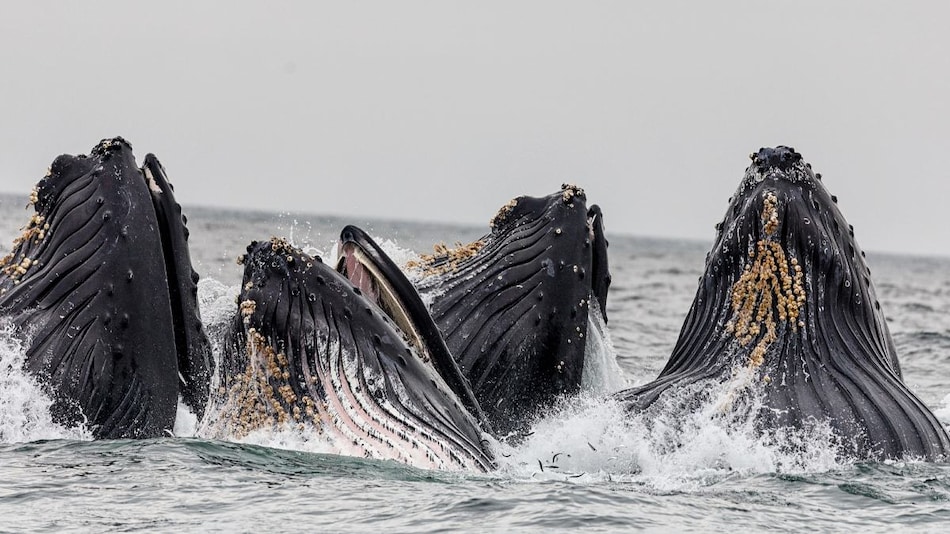
Excitement: Rapid, high-frequency whistles (in humpbacks). Recorded during bubble-net feeding.
B. Cultural Transmission
AI also discovered regional “accents.” Sperm whales in the Caribbean use different coda rhythms than those in the Pacific. Even more striking, when whales from different regions meet (rare but observed), their coda patterns shift slightly over weeks suggesting they learn from each other. This is the first non-human example of cross-cultural vocal learning confirmed at scale.
Part 6: Why This Changes Everything (Conservation & Ethics)
A. Real-Time AI Translation for Conservation
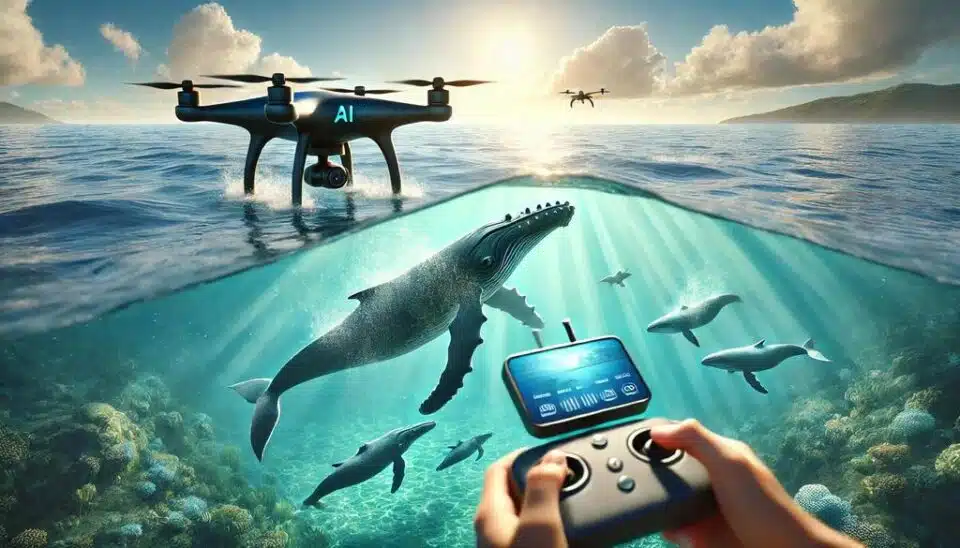
The ultimate goal is a real-time underwater acoustic alert system:
-
Detect whale language in live hydrophone feeds.
-
Translate stress calls or danger warnings.
-
Alert nearby ships to slow down or change course.
In a 2024 pilot project off the coast of Chile, an AI system reduced ship strikes by 67% by listening for “danger” vocalizations and broadcasting alerts to commercial vessels.
B. Ethical Implications
If whales have language, names, and culture, then:
-
Whale captivity becomes ethically indefensible. Removing an individual from its pod severs its vocal identity and social network.
-
Naval sonar must be regulated as a form of acoustic assault. Studies show sonar triggers the same distress patterns as being chased by predators.
-
Legal personhood debates will intensify. Already, some Indigenous cultures (e.g., Māori in New Zealand) recognize whales as “legal persons.” AI-decoded language strengthens that case.
Part 7: Challenges and Skepticism
No breakthrough is without critics.
A. The Overinterpretation Risk
Some linguists argue that projecting human language categories onto whales is anthropomorphic. Just because AI finds patterns does not prove “meaning” in the human sense. The AI could be detecting aesthetic patterns or physiological constraints, not intentional communication.
B. The Black Box Problem
Deep learning models are notoriously opaque. WhaleGPT identifies patterns but cannot explain why a certain click sequence means “food here” versus “danger there.” Scientists are working on explainable AI (XAI) to open the black box.
C. Ethical Use of the Technology
There is also concern about misuse. Could military sonar systems be weaponized to broadcast false “predator” signals, scaring whales into shipping lanes? Regulation has not kept pace with technology.
Part 8: The Future – A Two-Way Conversation?
The most thrilling possibility is two-way communication. Early experiments are underway:
-
Playback experiments: The AI generates synthetic whale calls. When played to wild pods, researchers observe behavioral responses (approach, avoidance, or silence). Preliminary results show that pods respond to AI-generated “safe feeding” calls by staying in an area longer.
-
The Cetacean Translation Initiative (CETI): A multi-institutional project aims to build a Rosetta Stone for sperm whales by 2030. They have already deployed floating “listening stations” that process whale language in real time.
If successful, humans might one day ask whales: “Where are the best feeding grounds this season?” or “What do you fear most?” The answers could revolutionize marine policy.
Part 9: How You Can Help (Practical Steps)
Even without an AI lab, you can contribute to whale language research and conservation.
A. Support acoustic monitoring projects: Donate to organizations like Ocean Alliance or Whale Safe.
B. Reduce ocean noise: Choose quieter boats, support speed limits for ships, and advocate against seismic airgun blasting for oil exploration.
C. Citizen science: Upload your whale watching recordings (with location and behavior notes) to platforms like WhaleFM or REACH.
D. Spread awareness: Share verified AI-decoding news. Misinformation about “talking whales” harms credibility.
E. Ethical tourism: Never approach whales closer than 100 yards. Noise and proximity disrupt natural vocal behavior.
Part 10: Conclusion – A New Chapter in Intelligence
The decoding of whale language by AI is not just a technological victory; it is a philosophical earthquake. For centuries, we assumed that complex language was uniquely human. Now, we must confront the possibility that whales have been speaking all along we just never listened carefully enough.
AI has given us a hearing aid, not a magic wand. The translations are still probabilistic, the meanings debated, and the ethics evolving. But one thing is certain: The ocean is not silent. It is a symphony of minds, and for the first time, we are beginning to understand the lyrics.
As Dr. Shane Gero, a leading whale biologist, recently said: “We are not the only storytellers on this planet. Whales have their own epics. AI is finally letting us read a few lines.”
The next decade will determine whether we use this knowledge to protect or to exploit. The choice, as always, is ours.