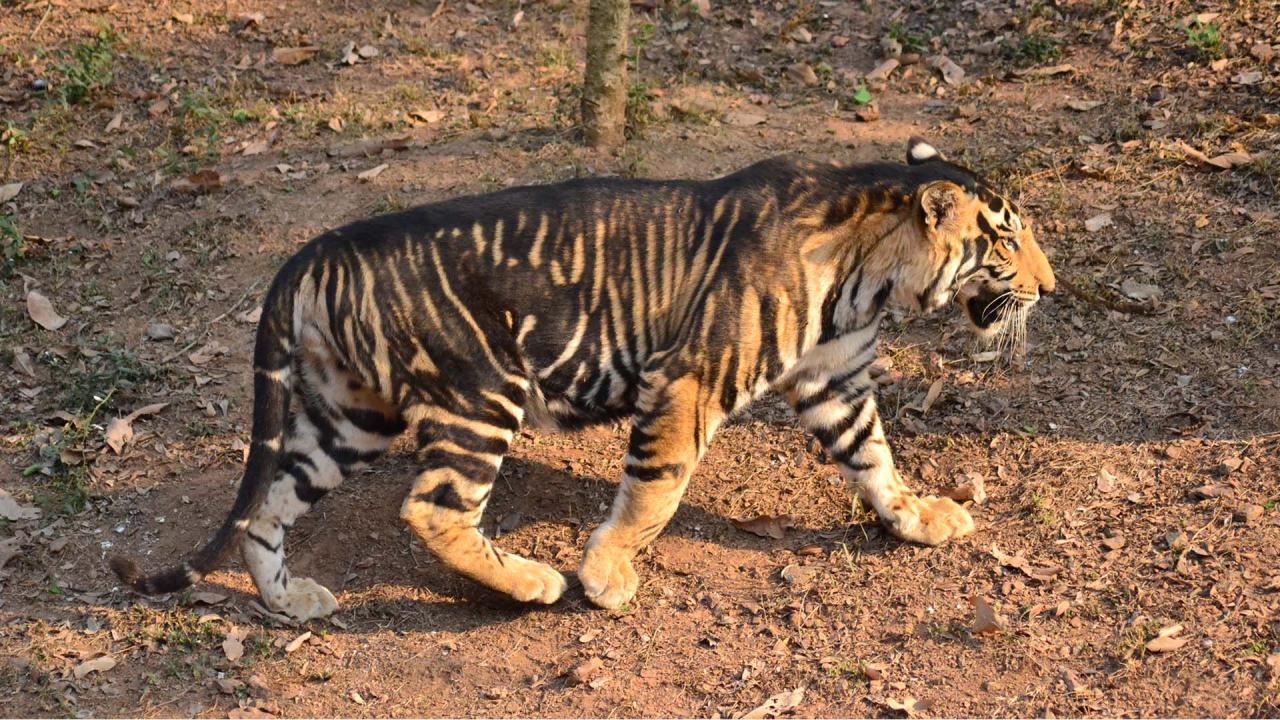
In the dense, emerald-green jungles of eastern India, where the canopy filters sunlight into scattered golden droplets and the air hums with the calls of unseen creatures, a ghost walks. Not a ghost of pale white, but one of deep, impenetrable shadow. Its stripes are not orange and black, but black upon black, a living silhouette that seems to absorb light itself. For years, this phantom existed only in local folklore, whispered tales told by villagers and forest guards who claimed to have seen a “tiger that melted into the night.” Now, the world has finally seen it. A rare black tiger technically a “pseudo-melanistic” tiger has been photographed in stunning clarity, sending ripples of excitement and renewed urgency through the global conservation community.
This single photograph, captured by an amateur wildlife photographer during a guided safari in the Similipal Tiger Reserve in Odisha, India, is more than just a breathtaking image. It is a biological marvel, a genetic puzzle, and a powerful symbol of what remains hidden in the last wild places on Earth. While the world is familiar with the majestic Royal Bengal Tiger, few have even heard of its darker, rarer cousin. This article delves deep into the story behind the photograph, the science of pseudo-melanism, the unique ecosystem of Similipal, the urgent conservation challenges these tigers face, and what this discovery means for the future of big cat preservation.
A. The Photograph That Shocked the World
The image itself is stark and ethereal. It captures a large male tiger mid-stride, his muscular body cutting through a shaft of morning light. But unlike the iconic orange coat with black stripes, this tiger’s base fur is a deep, burnt amber so dark that it appears nearly black. The typical black stripes have broadened, merged, and flowed into one another, covering almost the entire body. Only faint hints of the orange background glow peek through on the lower flanks and inner legs. Its face, however, retains the traditional pattern, making its piercing yellow eyes stand out like lanterns in a dark room.
The photographer, who had spent three days tracking pugmarks and listening to alarm calls of deer, almost missed the sighting. “I thought it was a shadow at first,” he later told a local news agency. “My guide whispered ‘black tiger,’ and my hands started shaking. For ten seconds, it was just there, looking at us. And then it vanished into the bamboo. I got only two shots. This was the best one.”
That ten-second encounter validated decades of anecdotal evidence. While scientists had confirmed the existence of melanistic (black) leopards and jaguars, a true black tiger had never been conclusively documented in the wild at such high quality. Previous sightings were grainy camera trap images or fleeting glimpses. This photograph is definitive proof.
B. What Is a “Black Tiger”? Understanding Pseudo-Melanism
To appreciate the rarity of this event, one must first understand that the term “black tiger” is somewhat misleading. Unlike a black panther (which is a melanistic leopard or jaguar), a so-called black tiger is not entirely devoid of orange. Instead, it exhibits a condition known as pseudo-melanism or abundant melanism.
Here is a breakdown of the genetics and visual differences:
A. Standard Bengal Tiger (Panthera tigris tigris):
-
Base coat: Bright orange to reddish-orange.
-
Stripes: Dark brown to black, widely spaced.
-
Belly and inner limbs: White or cream-colored.
B. Pseudo-Melanistic Tiger:
-
Base coat: Extremely dark orange or brown, nearly obscured.
-
Stripes: Extra-thick, closely spaced, and often fused together.
-
Visible orange: Only on a small percentage of the body, usually the face, lower legs, or groin area.
-
Result: From a distance, the tiger appears solid black.
C. True Melanistic Tiger (Hypothetical):
-
No orange pigment at all; entirely black with faint ghost stripes.
-
Has never been scientifically documented in any tiger population.
The cause of pseudo-melanism in Similipal’s tigers is a specific genetic mutation in the Taqpep gene (transmembrane aminopeptidase Q). This is the same gene responsible for stripe pattern variations in domestic cats and cheetahs. In tigers, when this gene mutates, it widens the black stripes until they dominate the coat. Importantly, this mutation is recessive, meaning both parents must carry the gene to produce a pseudo-melanistic cub.
C. Why Only in Similipal? The Unique Genetic Bottleneck
Of the world’s estimated 3,900 wild tigers, only one population consistently produces pseudo-melanistic individuals: the tigers of the Similipal Tiger Reserve. This is not a coincidence. It is the result of a perfect storm of geography, isolation, and inbreeding.
1. Geographic Isolation:
Similipal is a 2,750-square-kilometer rainforest in the Mayurbhanj district of Odisha. It is part of the Eastern Ghats mountain range and is one of the largest and oldest tiger reserves in India. For centuries, this forest was a princely hunting ground for the Maharaja of Mayurbhanj, which limited human encroachment but also isolated the tiger population from other reserves.
2. Small Founding Population:
Genetic studies suggest that the current tiger population of Similipal (estimated 25–30 individuals) descended from a very small group of tigers possibly as few as five to seven ancestors during the early 20th century. This created a genetic bottleneck.
3. Inbreeding and Recessive Genes:
When a small population inbreeds, recessive traits that are normally rare become amplified. In Similipal, the recessive Taqpep mutation was present in a founding ancestor. Over generations, matings between relatives increased the chances of two carriers producing a pseudo-melanistic cub. Today, approximately 37% of Similipal’s tigers carry this mutation, and about 8–10% visibly express the black coat.
4. No Other Known Population:
Extensive camera trapping in other Indian reserves Kanha, Bandhavgarh, Ranthambore, Kaziranga has never produced a pseudo-melanistic tiger. Even in zoos, this coloration is exceptionally rare. One famous captive example, a tiger named “Sita” at the Nandankanan Zoological Park in Odisha, was the first confirmed pseudo-melanistic tiger in captivity, and she was originally wild-born from Similipal.
Thus, Similipal is not just a home for black tigers; it is the only home on Earth for them.
D. The Folklore and First Scientific Records
Long before the photograph went viral, local indigenous communities particularly the Mankidia and Juang tribes had names for these shadow cats. They called them “kalo bagh” (black tiger) or “dhuan bagh” (smoke tiger). Hunting was never permitted by the Maharaja, who considered the black tiger a divine omen. One old legend tells of a forest spirit that took the form of a tiger with “stripes of burnt charcoal” to punish those who harmed the forest.
The first scientific mention of a “black tiger” dates back to 1993, when forest officials in Similipal found a dead tigress with unusually wide, fused stripes. The carcass was too decomposed for a skin sample, but photographs from that time show a pattern identical to today’s pseudo-melanistic tigers. In 2007, a camera trap captured a grainy, nighttime image of what appeared to be a black tiger, but many experts dismissed it as a lighting artifact. Then, in 2018, a comprehensive three-year genetic study led by the National Centre for Biological Sciences (NCBS) in Bangalore conclusively identified the Taqpep mutation. The recent photograph is the first high-resolution, daylight confirmation since that study.
E. How the Photograph Was Taken: A Step-by-Step Account

The sequence of events leading to the rare photograph offers valuable lessons for wildlife enthusiasts and underscores the role of ethical ecotourism.
A. Preparation and Research:
The photographer, a semi-professional wildlife enthusiast from Mumbai, spent three months studying Similipal’s topography, tiger movement patterns, and water sources. He specifically targeted the core area of the reserve, which is off-limits to casual tourists and requires special permits from the Chief Wildlife Warden.
B. The Safari Begins:
Unlike the crowded jeep safaris of northern India, Similipal offers limited, permit-based access. The photographer was accompanied by an experienced local guide named Ranjan, who had tracked tigers in the reserve for 18 years. Ranjan had seen a black tiger only twice before, both times at dusk.
C. Reading the Signs:
On the third morning, they found fresh pugmarks that were unusually large and showed a distinctive gait. The spacing was long, indicating a tiger walking slowly, not running. Droppings found nearby were less than six hours old and contained undigested sambar deer hair.
D. The Alarm Call Network:
At 7:42 AM, a langur monkey let out a sharp, repetitive “whoop” from a teak tree about 300 meters ahead. This was followed by the chital deer’s distinctive “phew” alarm call. Ranjan whispered, “He’s here. Something is moving.”
E. The Sighting:
They positioned their open-top gypsy behind a thick clump of elephant grass. For five minutes, there was silence. Then, a movement in the shadows. The photographer initially saw nothing but darkness under a banyan tree. As the tiger stepped into a sunbeam, the black coat became visible not as a void, but as a living, textured darkness. The tiger paused, looked directly at the camera for eight seconds, yawned, crossed the forest path, and disappeared into a bamboo thicket.
F. The Result:
Only two frames were sharp. The first showed the tiger mid-stride with its head turned. The second was a blurry tail. The photographer spent another week in Similipal but never saw the black tiger again. The image was published with permission from the Odisha Forest Department.
F. Why This Matters for Conservation
The viral spread of this photograph is a double-edged sword. On one hand, it brings unprecedented global attention to Similipal Tiger Reserve. On the other, it raises the risk of poaching, habitat disturbance, and irresponsible tourism.
Positive Impacts:
-
Increased funding: Within weeks of the photograph’s release, two international NGOs pledged $500,000 for anti-poaching patrols in Similipal.
-
Public awareness: Millions of people who had never heard of pseudo-melanism are now asking questions about tiger genetics.
-
Political will: The Odisha state government announced a “Black Tiger Protection Force” of 50 specially trained rangers.
Negative Risks:
-
Poaching threat: Black tiger skins and bones command exorbitant prices on the illegal wildlife black market. A single black tiger pelt could sell for over $100,000.
-
Stress from tourism: A sudden influx of photographers trying to replicate the shot could disturb breeding tigers.
-
Genetic vulnerability: Because the pseudo-melanistic trait is tied to inbreeding, the same genetic pool that produces black tigers also makes the population susceptible to disease and low fertility.
Recognizing these risks, the Similipal authorities have already restricted access to the core zone to only two guided vehicles per day, and night photography is strictly banned.
G. Comparison with Other Melanistic Big Cats
To fully grasp the rarity of the black tiger, it helps to compare it with other dark-coated wild cats.
| Species | Melanistic Form | Frequency | Genetic Cause |
|---|---|---|---|
| Leopard (Panthera pardus) | Black panther | Common in SE Asia (up to 11% of population) | Recessive mutation in ASIP gene |
| Jaguar (Panthera onca) | Black jaguar | Common (approx. 6% of Amazon population) | Dominant mutation in MC1R gene |
| Serval (Leptailurus serval) | Melanistic serval | Very rare | Unknown, few records |
| Bobcat (Lynx rufus) | Black bobcat | Extremely rare (only 12 confirmed specimens) | Unknown |
| Tiger (Panthera tigris) | Pseudo-melanistic only | Exceptionally rare (only Similipal, 8-10% of local tigers) | Recessive mutation in Taqpep (stripe width) |
Note that no true, fully melanistic tiger has ever been verified. The “black tigers” of Similipal are actually dark orange tigers with hyper-expanded stripes. A true black tiger would require a separate mutation that eliminates phaeomelanin (orange pigment) entirely, which has never occurred in any wild tiger population.
H. The Future of the Black Tiger
What happens next for the rare black tiger of Similipal depends on a delicate balance between science, tourism, and law enforcement.
A. Population Monitoring:
The Wildlife Institute of India has launched a dedicated “Project Black Tiger” using AI-driven camera traps that can identify individual tigers by their unique stripe patterns. Even on a black coat, the underlying stripe pattern remains unique, much like a fingerprint. This will help estimate the true number of pseudo-melanistic individuals.
B. Genetic Management:
While inbreeding produced the black tiger, further inbreeding could lead to deformities, reduced cub survival, and sterility. Conservation geneticists are discussing a controversial plan: introducing two or three unrelated tigers from another reserve (e.g., Kanha or Kaziranga) to diversify the gene pool without losing the rare Taqpep mutation entirely.
C. Anti-Poaching Measures:
In 2021, a gang of poachers was arrested near Similipal with night-vision goggles and a homemade rifle. They admitted they were searching for the “black one.” In response, forest department now conducts weekly drone surveillance over high-risk zones. Additionally, all vehicles entering the reserve are scanned with chemical detectors that can smell tiger bone powder.
D. Ecotourism Guidelines:
Responsible ecotourism will be crucial. Instead of banning tourism outright, authorities are developing a lottery system for black tiger viewing permits. Only 500 permits will be issued annually, each costing $200, with 100% of proceeds going directly to conservation. Guides must complete a 40-hour certification course on tiger behavior and ethics.
E. Scientific Research:
Researchers are currently studying whether the pseudo-melanistic coat offers any survival advantage or disadvantage. Does the dark coat help in hunting at night or in the dense, shadowy sal forests of Similipal? Or does it make thermoregulation harder in the summer heat? Early data suggests that black tigers have slightly lower hunting success rates during full daylight but higher success during dawn and dusk compared to normal tigers.
I. How You Can Help Protect the Black Tiger
You do not need to be a wildlife biologist or a photographer to contribute to the survival of these rare animals. Here are actionable steps for the average concerned citizen:
A. Support verified conservation NGOs that work in Odisha, such as the Wildlife Society of Orissa (WSO) or the Tiger Research and Conservation Trust (TRACT). Even a $10 monthly donation can fund a day of anti-poaching patrols.
B. Never share exact location data of wildlife sightings on social media. Geo-tagging a black tiger photo can lead poachers directly to its territory. If you post the image, turn off location services and only mention “Similipal region” broadly.
C. Report illegal wildlife trade if you see suspicious listings for tiger skins, bones, or “exotic pet” offers. In India, you can report to the Wildlife Crime Control Bureau (WCCB) at 1800-11-7442. Globally, contact TRAFFIC or the World Wildlife Fund.
D. Choose ethical wildlife tourism. Before booking a safari, ask the operator: Do they follow morning-only safaris? Do they limit group size to six people? Do they forbid baiting or loud noises? Avoid any operator that guarantees a “black tiger sighting” that is a red flag.
E. Educate others. Share the correct information: Black tigers are not a separate species, not a supernatural omen, and not a captive-bred novelty. They are a fragile genetic treasure of one Indian forest.
J. Conclusion: A Shadow Worth Saving
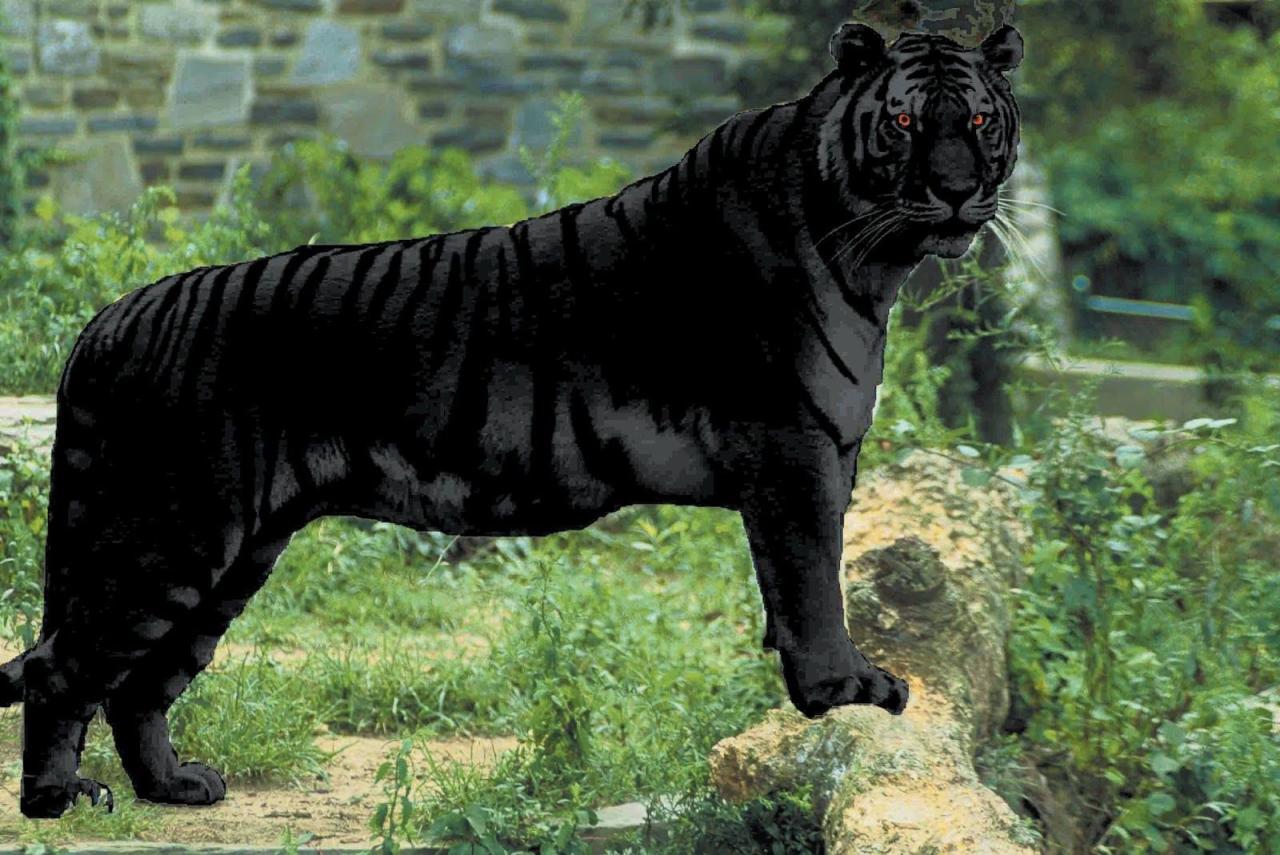
The rare black tiger photographed in Similipal is more than a biological anomaly. It is a messenger from the wild edge of extinction. In a world where three tiger subspecies are already extinct (Bali, Javan, and Caspian), and the Malayan, Indochinese, South China, and Sumatran tigers hang by a thread, every unique lineage matters. The pseudo-melanistic tigers of Odisha represent a branch on the tiger family tree that exists nowhere else. Lose Similipal, and you lose the black tiger forever.
The photograph that captivated the internet is a gift a moment of grace where nature’s hidden artistry was briefly illuminated. But it is also a responsibility. For every like, share, and comment that image receives, there must be a corresponding action: a donation, a signature on a petition, a decision to travel responsibly. The ghost of the jungle has shown itself. Now, it is our turn to ensure it does not become a ghost in memory alone.
As the sun sets over the sal forests of Similipal, and the nocturnal creatures begin their chorus, a black tiger somewhere moves through the undergrowth. Its stripes, invisible against its dark fur, are a secret code written by evolution over millennia. For now, that code is safe. But its future is written in the choices we make today. Let the rare black tiger not be the last of its kind, but the first of a new chapter in conservation one where the rarest shadows are given the brightest light of protection.