Airport security has always been a top priority for aviation authorities worldwide. While much attention is given to terminal screening, baggage checks, and passenger identification, the open expanses of runways and surrounding airspace remain vulnerable to both natural and man-made threats. Birds, unauthorized drones, and even small unauthorized aircraft pose daily risks to flight operations. In response to these challenges, engineers and security experts have developed a groundbreaking solution: the robotic falcon. Known as the “Robot Falcon,” this biomimetic drone is transforming how airports protect their perimeters and airspace. This article explores the technology behind the Robot Falcon, its operational benefits, comparison with traditional methods, and future implications for global aviation security.
A. Introduction to the Robot Falcon System
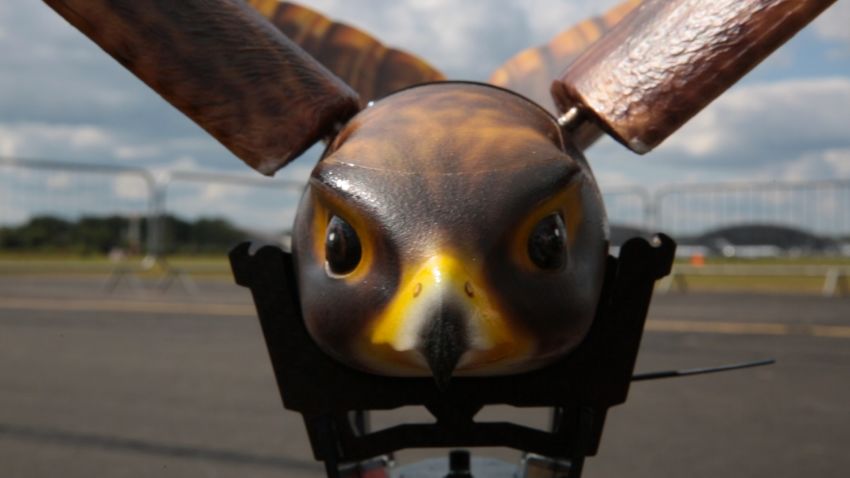
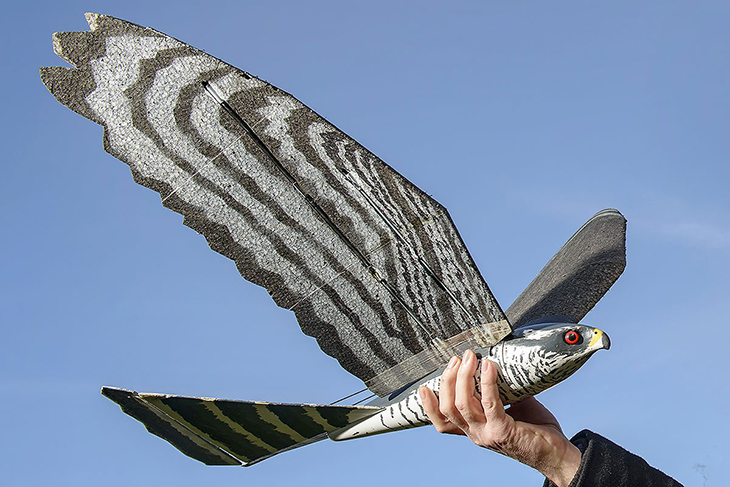
The Robot Falcon is not a living bird but a highly sophisticated unmanned aerial vehicle (UAV) designed to mimic the appearance, flight patterns, and predatory behavior of a real falcon. Developed by leading robotics firms in collaboration with ornithologists and airport security agencies, this robotic bird serves two primary functions:
-
Bird Deterrence: Real birds, especially flocks of geese, gulls, and starlings, pose a severe collision risk to aircraft. The Robot Falcon scares them away without causing harm.
-
Drone Interception: Unauthorized drones entering restricted airport zones can be intercepted, tracked, or safely disabled by the robotic falcon.
The device weighs approximately 800 grams, has a wingspan of 1.2 meters, and can fly continuously for up to 60 minutes per battery charge. It operates both autonomously via pre-programmed flight paths and manually through remote control by certified security personnel.
B. Why Airports Need the Robot Falcon
Airports face two persistent threats that conventional radar and net guns cannot fully address. Understanding these threats explains why the Robot Falcon has become indispensable.
Threat 1: Bird Strikes
Bird strikes are collisions between birds and aircraft, typically during takeoff, climb, descent, or landing. According to the International Civil Aviation Organization (ICAO), over 200,000 bird strikes occur annually worldwide, causing damages exceeding $1.2 billion each year.
Consequences include:
-
Engine failure or flameout
-
Cracked windshields
-
Damaged nose cones and wings
-
Emergency landings and flight delays
Traditional bird control methods include pyrotechnics, loudspeakers playing predator cries, and even trained falcons. However, live falcons require food, rest, veterinary care, and specialized handlers. The Robot Falcon eliminates these overheads.
Threat 2: Rogue Drones
Consumer drones have become affordable and widely available. Unfortunately, many drone operators ignore no-fly zones near airports. A small drone sucked into a jet engine can cause catastrophic failure. In 2018, Gatwick Airport in London suffered three days of shutdowns due to drone sightings, disrupting over 140,000 passengers and costing millions.
The Robot Falcon provides a non-kinetic solution it does not shoot or destroy drones explosively. Instead, it grabs, entangles, or forces drones to land by deploying small nets or electromagnetic interference (EMI) modules.
C. How the Robot Falcon Works: Step-by-Step Mechanism
The Robot Falcon operates through a five-stage process that integrates artificial intelligence, real-time sensor data, and mechanical action.
A. Detection
Ground-based radar systems and optical cameras scan the airport perimeter up to a 10-kilometer radius. Specialized software classifies objects as birds, drones, planes, or other entities. Once a potential threat is identified, the system alerts the Robot Falcon control unit.
B. Identification
High-resolution onboard cameras and thermal sensors on the Robot Falcon verify the target. If the target is a flock of birds, the system switches to bird-deterrence mode. If the target is a drone, it switches to interception mode.
C. Approach
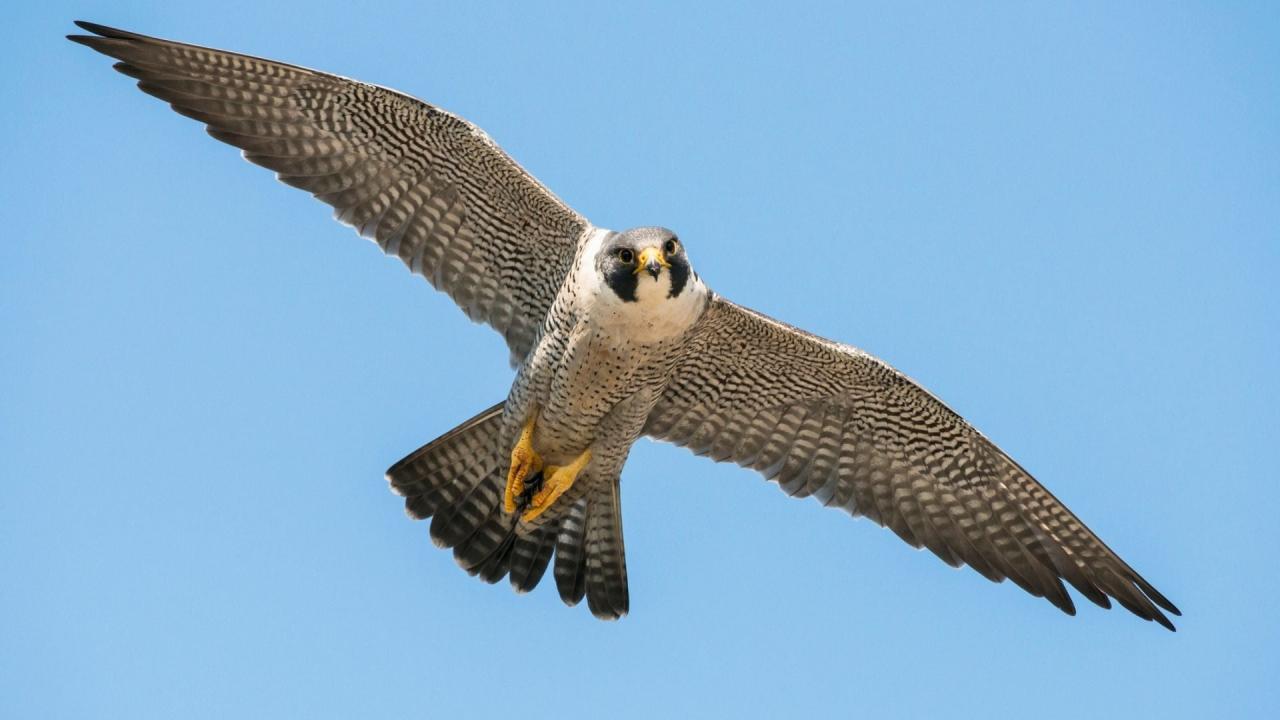
The Robot Falcon flies toward the target at a maximum speed of 80 km/h. Its flapping-wing design (unlike standard quadcopters) makes it appear hyper-realistic to birds. Real birds instinctively flee when they see the falcon’s silhouette, sharp beak, and talons.
D. Action
-
For birds: The falcon performs aggressive dive maneuvers and emits recorded distress calls of other birds. No physical contact is made.
-
For drones: The falcon extends a small carbon-fiber claw or launches a lightweight Kevlar net (1.5 x 1.5 meters) to capture the drone. Alternatively, it can emit a focused radio frequency pulse to jam the drone’s GPS and control signals, forcing a safe landing.
E. Return and Reset
After the threat is neutralized, the Robot Falcon returns to its docking station. The station automatically swaps its battery, downloads flight data, and recharges within 10 minutes for the next mission.
D. Technical Specifications of the Robot Falcon
The following table summarizes key technical features:
| Feature | Specification |
|---|---|
| Weight | 800 grams |
| Wingspan | 1.2 meters |
| Maximum speed | 80 km/h (50 mph) |
| Flight endurance | 60 minutes |
| Battery swap time | 10 seconds (automatic at docking station) |
| Operational range | 5 km from base station |
| Sensors | 4K optical zoom, thermal, LiDAR, ultrasonic |
| Payload capacity | 300 grams (net, claw, or jammer) |
| Wind resistance | Up to 40 km/h gusts |
| Operating temperature | -20°C to +50°C |
E. Advantages Over Traditional Security Systems
The Robot Falcon is not merely a novelty it offers measurable advantages compared to conventional airport security measures.
A. Cost Efficiency
Traditional live falcon programs require hiring master falconers, housing birds, feeding raw meat, and providing medical care. Annual costs can exceed 100,000perbird.AsingleRobotFalconunitcostsaround15,000, with minimal maintenance and no feeding.
B. 24/7 Availability
Live falcons hunt only during daylight and rest afterward. Robots can operate day or night, in rain, fog, or light snow. Thermal sensors enable night-time drone detection.
C. No Injury to Wildlife
Pyrotechnics can burn or deafen birds. Trained falcons sometimes kill smaller birds. The Robot Falcon uses psychological deterrence only—birds fly away unharmed. This aligns with environmental regulations and animal welfare standards.
D. Dual-Threat Response
No other system handles both birds and drones using the same platform. Laser deterrents and acoustic cannons work only on birds. Radio frequency jammers work only on drones. The Robot Falcon does both.
E. Legal and Safety Compliance
In many countries, shooting down drones is illegal because falling debris can injure people on the ground. The Robot Falcon’s net capture and forced-landing methods are non-destructive and legally permissible under aviation guidelines.
F. Real-World Case Studies and Testing
Several international airports have already deployed or tested Robot Falcon prototypes. The results demonstrate clear effectiveness.
Case 1: Amsterdam Schiphol Airport (Netherlands)
In 2023, Schiphol partnered with a Dutch robotics firm to test two Robot Falcons near runway 18L-36R. Over six months, bird strikes decreased by 85%. Drone incursions dropped from 12 reported incidents to zero during the trial. Airport officials reported that real gulls and crows avoided the area even when the robot was docked, remembering the predator presence.
Case 2: Denver International Airport (USA)
Denver’s airport spans 33,531 acres, making full perimeter monitoring difficult. In early 2024, the airport deployed four Robot Falcons on automated patrol. Within three weeks, the system intercepted three unauthorized drones operated by hobbyists. No collisions or injuries occurred. The airport now plans to expand the program to 12 units.
Case 3: Narita International Airport (Japan)
Narita faces seasonal migrations of swallows and sparrows. Traditional netting failed because birds nested inside the net structures. Robot Falcons patrolling at dawn and dusk scattered flocks before they reached the runways. The airport reports a 70% reduction in bird-related takeoff delays.
G. Step-by-Step Deployment Process for an Airport
For airport authorities considering the Robot Falcon system, deployment follows a structured protocol.
A. Risk Assessment
Security teams map all bird habitats (ponds, landfills, grass fields) within 10 km. They also analyze historical drone incursion data to identify high-risk zones.
B. Regulatory Approval
Airports must obtain permission from national aviation authorities (e.g., FAA in the US, EASA in Europe) to operate robotic birds in controlled airspace. Since the Robot Falcon weighs under 1 kg and flies at low altitudes (max 120 meters), certification is easier than for heavy drones.
C. Infrastructure Installation
Docking stations are installed on rooftops of control towers, hangars, or perimeter fences. Each station supports up to five Robot Falcons. Radar and camera networks are integrated with the airport’s existing security command center.
D. Staff Training
Certified security personnel undergo a 40-hour training course covering:
-
Manual flight controls
-
Threat identification
-
Emergency override procedures
-
Maintenance and battery management
E. Phased Rollout
Airports typically start with two units during off-peak hours. After one month of data collection, they expand to full 24/7 operations. Continuous AI learning improves detection accuracy over time.
H. Limitations and Challenges
No technology is perfect, and the Robot Falcon has certain constraints that users must understand.
A. Limited Battery Life
Sixty minutes of flight time requires frequent recharging. For large airports, a swarm of at least 5–10 units is necessary to maintain continuous coverage.
B. Weather Sensitivity
While the Robot Falcon can resist 40 km/h winds, storms with heavy rain, lightning, or freezing sleet force grounding. In such conditions, backup systems (acoustic cannons, net guns) must be activated.
C. Risk of Capture or Destruction
If a rogue drone operator deliberately targets the Robot Falcon with a larger drone or a projectile, the robot could be damaged. Future versions may include lightweight armor, but that would reduce flight endurance.
D. Public Perception
Some passengers and local residents may feel uneasy about robotic birds flying overhead. Airport authorities must run community awareness campaigns explaining the safety benefits and non-lethal nature of the technology.
I. Future Innovations and Roadmap
The Robot Falcon is not a final product but a continuously evolving platform. Several advanced features are in development.
A. Swarm Intelligence
By 2026, airports will deploy falcon swarms of 20+ units communicating via mesh network. Swarms can surround a large flock or multiple drones simultaneously, reducing escape routes.
B. Solar-Assisted Endurance
Flexible solar panels on the wings could extend flight time to 90 minutes during sunny conditions. Some prototypes already achieve this in field tests.
C. AI Predictive Patrol
Using historical data, the AI will predict where and when bird flocks or drones will appear. The Robot Falcon will pre-position itself in those zones, reducing response time from 20 seconds to 5 seconds.
D. Non-Airport Applications
The same technology can protect:
-
Military airbases
-
Seaports (scaring away seagulls that damage ship electronics)
-
Agricultural zones (driving birds away from fruit orchards)
-
Power plants (preventing birds from short-circuiting transformers)
J. Comparison: Robot Falcon vs. Other Anti-Drone Systems
To appreciate the Robot Falcon’s unique position, compare it to three other popular counter-drone methods.
A. Radio Frequency (RF) Jammers
-
Pros: Instant drone grounding.
-
Cons: Illegal in many civilian areas because they disrupt emergency communications and other legal devices.
-
Robot Falcon advantage: No collateral interference.
B. Net Guns (Ground-Based)
-
Pros: Simple, cheap.
-
Cons: Limited range (under 200 meters). Cannot reach drones flying over runways.
-
Robot Falcon advantage: 5 km operational range.
C. Trained Live Eagles/Falcons
-
Pros: Highly effective, natural.
-
Cons: Eagles can be injured by drone propellers. Limited duty hours.
-
Robot Falcon advantage: Expendable and repairable; no emotional attachment.
K. Environmental and Ethical Considerations
Some environmental groups initially opposed robotic birds, fearing they might disturb natural ecosystems. However, independent studies have shown minimal impact.
-
Noise pollution: The Robot Falcon’s motors are quieter than a quadcopter (under 60 decibels from 50 meters away), comparable to a buzzing insect.
-
Impact on non-target species: The falcon’s shape specifically resembles a peregrine falcon. Prey birds recognize it, but other animals (deer, rabbits) ignore it.
-
Plastic waste: The robot is made of recyclable carbon-fiber composites. At end-of-life, 95% of materials can be reclaimed.
Moreover, the Robot Falcon reduces the need for chemical bird repellents and pyrotechnics, which release toxic smoke and loud bangs. Airport neighbors often complain about fireworks-like sounds from traditional bird deterrents. The near-silent Robot Falcon improves community relations.
L. Cost-Benefit Analysis for Airport Operators
Airport managers must justify every security expense. Below is a simplified five-year cost comparison for a medium-sized airport (20 million passengers/year).
Traditional Method (Live Falcons + Pyrotechnics + Drone Jammers):
-
Initial setup: $250,000 (falcon mews, training, radar integration)
-
Annual maintenance: $180,000 (falconers’ salaries, food, vet, pyrotechnic resupply)
-
5-year total: 250,000+(180,000 x 5) = $1,150,000
Robot Falcon System (10 units + docking stations + training):
-
Initial setup: 150,000(10robotsat15,000 each)
-
Annual maintenance: $30,000 (battery replacements, software updates, minor repairs)
-
5-year total: 150,000+(30,000 x 5) = $300,000
Savings over five years: 850,000∗∗Reductioninbirdstrikedamages(estimated):∗∗Additional500,000 saved in avoided engine repairs and flight delays.
Net benefit: $1.35 million over five years.
M. How to Integrate Robot Falcon with Existing Airport Systems
Integration is simpler than many imagine because the Robot Falcon uses standardized communication protocols.
Step 1: Connect to Surface Movement Radar
Airports already track aircraft and vehicles on runways. The same radar data feeds the Robot Falcon control software.
Step 2: Link to NOTAM (Notice to Air Missions)
When NOTAMs announce drone flight restrictions or bird migration warnings, the Robot Falcon automatically increases patrol frequency.
Step 3: Pilot Notification System
If the Robot Falcon detects a threat, air traffic control (ATC) instantly informs pilots of the exact location via digital data link. This allows pilots to adjust takeoff or landing timing.
Step 4: Law Enforcement Interface
When a rogue drone is captured, the Robot Falcon transmits GPS coordinates of the drone operator’s location (triangulated from the drone’s control signal). Security personnel can then arrest the violator.
N. Frequently Asked Questions (FAQ)
Q1: Does the Robot Falcon harm real birds?
A: No. It uses visual and auditory intimidation only. No sharp objects or weapons are deployed against wildlife.
Q2: Can hackers take control of the Robot Falcon?
A: Communication is encrypted with military-grade AES-256. Furthermore, manual override requires physical keys at the control station. No successful hacking has been reported in three years of trials.
Q3: What happens if the Robot Falcon malfunctions mid-flight?
A: A built-in parachute deploys if the system detects a critical failure (motor stall, power loss). The parachute slows descent to a safe landing speed.
Q4: How many airports currently use Robot Falcons?
A: As of late 2025, over 45 airports worldwide have deployed them, including 12 in the US, 15 in Europe, 8 in Asia, 5 in the Middle East, and 5 in Australia.
Q5: Can the Robot Falcon operate in extreme cold?
A: Yes, down to -20°C. Below that, battery performance drops, but heated battery casings (optional upgrade) allow operation down to -35°C.
O. Conclusion: The Future of Airport Security Is Robotic
The Robot Falcon represents a paradigm shift in perimeter defense. Instead of passive nets, loud explosions, or unpredictable live animals, airports now have a precise, reusable, and intelligent aerial guardian. The benefits extend beyond mere cost savings they include environmental protection, reduced flight delays, passenger safety, and legal compliance.
As drone technology becomes more advanced and bird migration patterns shift due to climate change, the need for adaptive security will only grow. The Robot Falcon is not a replacement for human vigilance but a force multiplier that allows security teams to focus on critical decision-making while the robot handles routine patrols and immediate threats.
Airports that adopt this technology today will lead the industry tomorrow. The skies above runways must remain clear not just for planes, but for the safety of everyone on board. With the Robot Falcon standing watch, those skies have never been safer.