
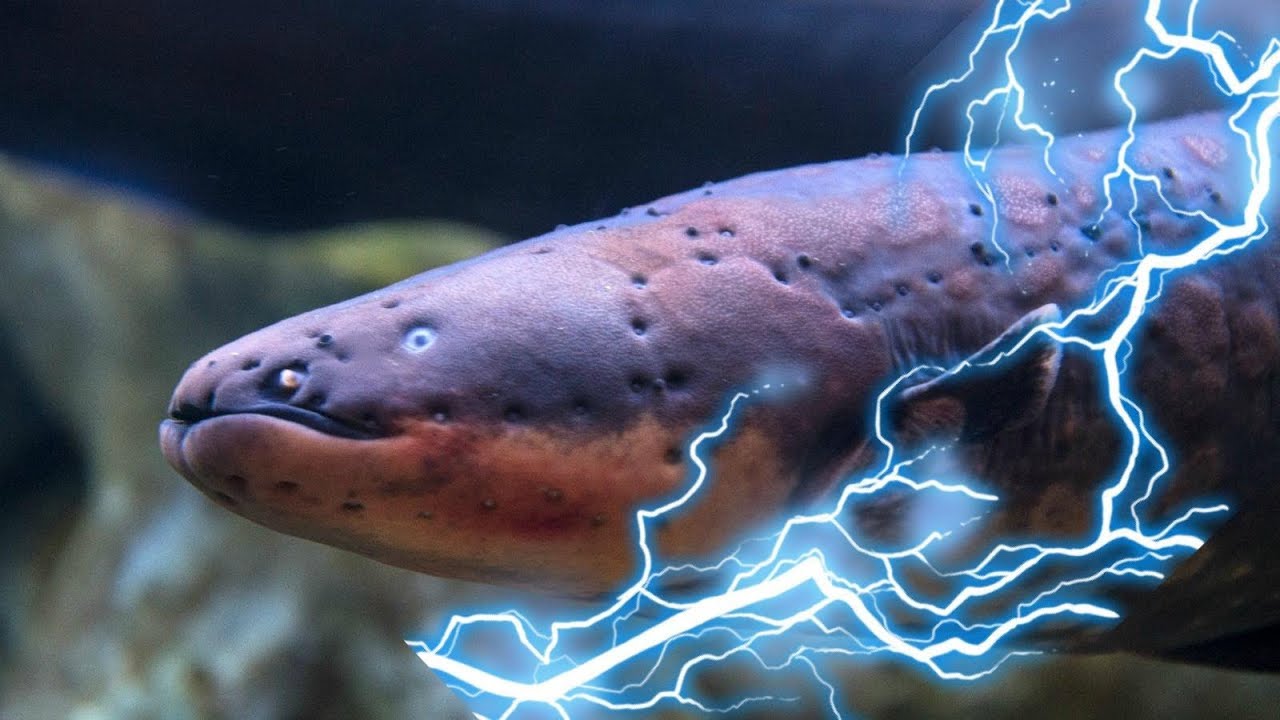
In the murky, slow-moving waters of the Amazon and Orinoco river basins, a creature glides with an astonishing secret hidden within its elongated, serpentine body. This is not merely another fish swimming in the shadowy depths; it is a living battery, a biological powerhouse capable of generating enough electricity to stun a horse—or, as scientists have recently demonstrated, to power a small LED lamp. The remarkable phenomenon of an electric eel lighting a lamp has captivated researchers, engineers, and nature lovers alike, bridging the gap between raw biological evolution and human innovation.
For centuries, local indigenous peoples have known about the shocking power of the electric eel (Electrophorus electricus). Early explorers brought back terrifying tales of enormous fish that could kill men and boil the river water around them. However, only in the last decade have scientists begun to truly understand the sophisticated electrogenic systems inside these creatures. The concept of using an electric eel to power a lamp is not science fiction; it is a real, demonstrated event that took place in a research lab in 2019, when a team of biologists at Vanderbilt University used the natural electricity from a captive eel to illuminate holiday lights.
This article will take you on an in-depth journey through the science behind this astonishing ability, the exact experiment that lit a lamp, the ecological and evolutionary reasons for electric generation, the anatomy of the eel’s shocking organs, the comparison with human-made batteries, potential future applications for bio-inspired energy, and the important conservation considerations surrounding this unique species.
A. The Experiment That Made Headlines
The most famous controlled demonstration of an electric eel powering a lamp occurred in 2019 at Vanderbilt University, led by neurobiologist Dr. Kenneth Catania. While Dr. Catania is renowned for his research into the eel’s predatory behavior, his side experiment involving holiday lights captured global attention. Here is a step-by-step breakdown of how the experiment worked:
-
Subject: A healthy adult electric eel, approximately 40 cm (about 16 inches) long, housed in a specialized aquarium. While larger eels can reach over 2 meters (6-7 feet) and generate up to 860 volts, this smaller specimen produced around 120 to 200 volts.
-
Equipment: A set of small, low-power LED Christmas lights designed to operate at very low voltages (approximately 1.5 to 3 volts DC) and a set of metal mesh electrodes placed strategically inside the tank.
-
Method: The electrodes were connected to the string of LED lights via wires. One electrode was placed at the head end of the tank (positive) and the other at the tail end (negative), mimicking the natural electric field gradient the eel creates.
-
Stimulation: Instead of harming the eel, Dr. Catania used a non-painful stimulus. He introduced a plastic tube resembling a fish (a fake prey item) into the tank. The eel, recognizing a potential meal, executed its standard high-voltage attack.
-
Result: When the eel lunged and discharged its electricity through the water, the electric current flowed from the positive to the negative electrode, passing through the wires and illuminating the LED lights in brief, rapid flashes. The lights flickered on for several hundred milliseconds each time the eel attacked, proving unequivocally that a living animal could power an electronic device.
This experiment was more than just a novelty. It demonstrated a proof-of-concept: biological electricity can be harvested and utilized. However, it is crucial to note that the eel did not power the lamp continuously. The eel’s discharges are pulsed, high-voltage, low-current bursts, not a steady flow like a household battery.
B. Understanding the Electric Eel: Not an Eel at All
Before diving deeper into the electricity, it is important to clarify a common biological misconception. The electric eel is not a true eel. True eels belong to the order Anguilliformes and breathe primarily through gills, while the electric eel is a type of knifefish (order Gymnotiformes), more closely related to catfish and carp. Let us examine the key differences:
A. Taxonomy:
-
True eels: Order Anguilliformes (e.g., moray eels, conger eels).
-
Electric eel: Order Gymnotiformes, family Electrophoridae. Its scientific name has recently been updated; before 2019, Electrophorus electricus was considered the only species, but now there are at least three: Electrophorus electricus, Electrophorus voltai (the highest voltage producer), and Electrophorus varii.
B. Breathing:
-
True eels: Use gills to extract oxygen from water.
-
Electric eel: Like other knifefish, it is an obligate air-breather. It must surface every 5 to 10 minutes to breathe atmospheric air using a specialized organ in its mouth. This adaptation allows it to live in stagnant, oxygen-depleted waters.
C. Body Shape and Organs:
-
True eels: Have a long, slender body with dorsal, anal, and caudal fins fused.
-
Electric eel: Has no dorsal fin. Its anal fin is elongated and undulates to allow forward and backward swimming. Nearly 80% of its body length is dedicated to electric organs.
D. Geographic Range:
-
True eels: Found worldwide in both freshwater and marine environments.
-
Electric eel: Strictly confined to the fresh, murky waters of northern South America (Amazon, Orinoco basins).
C. The Anatomy of Shock: Three Electric Organs
The reason an electric eel can power a lamp lies in its internal anatomy. Over millions of years, the eel’s tail has evolved three distinct pairs of electric organs: the main organ, the Hunter’s organ, and the Sach’s organ. Each has a different function in terms of voltage and amperage.
1. Sach’s Organ (Low Voltage, High Frequency):
-
Location: Near the tail.
-
Voltage: About 10 volts.
-
Function: This organ fires continuously at a frequency of 50 to 100 Hz, functioning like a biological radar system (electrolocation). The eel creates a weak electric field around its body. When a prey item or object distorts this field, the eel detects it, even in complete darkness or muddy water.
2. Main Organ and Hunter’s Organ (High Voltage, Low Frequency):
-
Location: These make up most of the eel’s body, from just behind the head to the tail.
-
Voltage: Between 100 and 860 volts, depending on the size and species. Electrophorus voltai holds the record at 860 volts.
-
Function: These organs produce the powerful, high-voltage shocks used for hunting and self-defense. They fire in short, millisecond-long pulses, not continuously.
How does each organ generate electricity? Each electric organ is composed of thousands of specialized cells called electrocytes. Electrocytes are modified muscle cells that have lost their ability to contract. Instead, they have become stacked in series, like the cells inside a car battery. The membrane of each electrocyte pumps sodium and potassium ions across its surface, creating a resting potential (like a charged capacitor). When the eel’s brain sends a nerve signal, ion channels open, and the polarity of the membrane reverses, creating a sudden flow of electrons. Each electrocyte produces only about 0.15 volts, but stacked end-to-end (like batteries in a flashlight), the voltage adds up. A 1-meter eel may have 5,000 to 10,000 electrocytes in series, generating 600-800 volts.
D. The Physics of Lighting a Lamp: Voltage, Current, and Resistance
To understand why an electric eel can light a small lamp but not a household lightbulb, we must recall basic electrical physics. The equation that matters is Power (Watts) = Voltage (Volts) x Current (Amperes).
-
Household lamp (60W incandescent): Needs 120 volts at 0.5 amperes (60W).
-
LED lamp (1W): Needs 3 volts at 0.33 amperes (1W).
-
Electric eel (medium): Produces 300 volts, but only at approximately 0.5 amperes, and only for 2 milliseconds. This yields a peak power of 150 watts. However, the average power is extremely low because the eel discharges only 1-2% of the time. In Dr. Catania’s experiment, the eel discharged multiple times per second during the attack, but each flash was brief. The LEDs store a tiny amount of energy in their capacitors, allowing them to flash brightly for fractions of a second.
Why can’t the eel power a lamp continuously?
The eel’s electric discharge is analogous to a lightning strike enormous peak voltage, but extremely short duration. To power a lamp steadily, you would need a continuous current, which the eel’s biology does not provide. The eel must rest and “recharge” its electrocytes between bursts, similar to how a muscle recovers after a sprint. If forced to discharge continuously, the eel would quickly deplete its ion gradients, suffer from metabolic exhaustion, and potentially die.
E. Why Did Evolution Create Living Batteries?
The electric eel’s ability is not a fluke; it is a highly refined survival strategy. Evolution selected for electric generation because it solves three major problems for a nearly blind fish living in dark, competitive waters.
I. Predation (Hunting)
-
The high-voltage shock (300-860 volts) instantly paralyzes small fish and invertebrates. The eel does not need to chase or bite; it simply discharges, and the prey floats motionless, allowing the eel to swallow it whole.
-
Unique tactic: The eel sometimes curls its body into a circle so that its head (positive) and tail (negative) encircle the prey, concentrating the electric field and doubling the effective voltage.
II. Defense
-
Large predators such as caimans, jaguars, and giant otters occasionally hunt electric eels. A single powerful shock can deter or even temporarily paralyze an attacker, giving the eel time to escape into the murky depths.
III. Electrolocation (Navigation)
-
Using its low-voltage Sach’s organ, the eel navigates through zero-visibility water. It detects not only obstacles but also the faint electric signals of hidden prey (like worms or crustaceans buried in mud). This gives the eel a “sixth sense” that no predator or prey can see.
F. Harvesting Bio-Electricity: Can We Really Use Eels as Power Sources?
The idea of farming electric eels to power human homes is a captivating thought experiment, but the practical realities make it impossible. Let us analyze the viability:
A. Energy Output vs. Input:
-
A large eel (2 m, 20 kg) produces high voltage, but its total stored energy is minuscule. The chemical energy the eel consumes from food (fish, crustaceans) is far greater than the electrical energy it produces. If you were to harvest all of the eel’s daily electrical output, you would obtain less than 0.1% of the energy contained in a single AA battery. The rest of the food energy goes to metabolism, growth, and heat.
B. Feeding Requirements:
-
To keep an eel producing shocks, you would need to feed it regularly (e.g., 100-200 grams of fish per day). The cost of that food far exceeds the cost of a conventional battery or grid electricity. It is energetically negative.
C. Ethical and Welfare Concerns:
-
Forcing an eel to discharge repeatedly would cause severe stress, injury, and death. Modern animal welfare standards would never permit such practices on a commercial scale.
D. Practical Demonstration Devices:
-
However, low-power devices (like LED lamps, small sensors, or novelty toys) can be momentarily powered in a laboratory setting, as demonstrated. Some researchers have proposed using eel-inspired bio-batteries—synthetic stacks of hydrogels and ion gradients as a more practical alternative.
Thus, the true value of the electric eel is not as a power plant but as a source of bio-inspiration for engineers designing flexible, high-voltage capacitors, new battery materials, and medical devices for nerve stimulation.
G. Comparison: Electric Eel vs. Man-Made Batteries
To appreciate the eel’s unique capabilities, it helps to compare it directly with human technologies.
| Feature | Electric Eel | Standard AA Alkaline Battery | Lithium-Ion Battery (Smartphone) |
|---|---|---|---|
| Voltage (per unit) | 600-860 V (for large eel) | 1.5 V | 3.7 V |
| Current (Amperes) | 0.5-1 A (peak) | 0.1-2 A (continuous) | 2-5 A (continuous) |
| Duration of Output | Milliseconds/pulsed | Hours | Hours |
| Total Energy (Joules) | ~50-100 J per discharge | ~15,000 J | ~40,000 J |
| Recharge Time | Minutes (rest and feed) | Not rechargeable | 1-3 hours |
| Self-Regeneration | Yes (biological, food input) | No | No |
| Environmental Impact | Carbon neutral (eats fish) | Toxic waste | Mining pollution |
As the table shows, the eel excels in peak voltage but fails in total energy storage and continuous delivery. It is a brilliant short-term weapon, not a long-term power supply.
H. Future Applications: What Humans Can Learn
While we cannot plug our homes into an aquarium of eels, scientists are actively researching how to copy the eel’s design. The emerging field of bio-inspired engineering has identified several promising avenues:
-
Soft, Implantable Power Sources: The eel’s electrocytes are soft, flexible, and biocompatible. Researchers at the University of Fribourg and the University of Michigan have created artificial “hydrogel batteries” that mimic the stacked structure of electrocytes. These could one day power pacemakers, neural implants, or drug delivery pumps inside the human body without toxic metals.
-
High-Voltage, Low-Current Capacitors: The eel’s ability to store high voltage in a small volume (its tail) has inspired new capacitor designs that can rapidly discharge energy for defibrillators, tasers, or emergency signaling devices.
-
Self-Healing Power Systems: If an eel’s electrocyte is damaged, the body can regenerate it. Future batteries might include self-healing polymers that maintain function after mechanical damage.
-
Environmental Sensors: Low-power sensors deployed in remote jungle or underwater environments could theoretically be recharged by passing fish that naturally produce electric fields. While not yet feasible, the eel proves that “energy harvesting” from biological motion is a real phenomenon.
I. Conservation and Ethical Considerations
No discussion of electric eels would be complete without addressing their conservation status and the ethics of using animals for energy experiments.
-
IUCN Status: The electric eel (Electrophorus electricus) is currently listed as Least Concern, meaning its population is stable. However, localized threats include habitat destruction (deforestation of the Amazon, hydroelectric dams, gold mining pollution) and capture for the exotic pet trade.
-
Ethical Research Guidelines: Dr. Catania’s experiments (and similar ones) are conducted under strict animal care protocols. The eels are not harmed, electrocuted, or exhausted. The “lamp lighting” test used only the eel’s natural predatory response, not continuous forced discharge. Researchers must ensure that any such demonstration minimizes stress, limits duration, and provides adequate rest.
-
The Pet Trade Problem: Many people mistakenly believe electric eels make interesting aquarium pets. They do not. They grow to over 2 meters, requires massive tanks (thousands of liters), are obligate air-breathers, and can deliver dangerous shocks to careless owners. Additionally, capturing wild eels for the pet market damages local populations.
J. Common Myths About the Electric Eel
Finally, let us debunk some persistent myths that circulate online, especially regarding the eel’s ability to power lamps and other devices.
Myth 1: Electric eels can continuously generate electricity like a household outlet.
Fact: False. They generate short, high-voltage pulses. They cannot produce a steady current.
Myth 2: An electric eel can kill a human.
Fact: Rare, but possible under certain conditions. A large eel’s 860-volt shock can cause cardiac arrhythmia or involuntary muscle paralysis leading to drowning. However, deaths are extremely uncommon. Most shocks cause intense pain and temporary immobility.
Myth 3: You can harvest an eel’s electricity by simply dropping wires into the water.
Fact: No, the eel must be actively hunting or threatened. Without the right electrode placement (head vs. tail), most current dissipates into the tank water. Efficient harvesting requires a precise electric gradient.
Myth 4: The eel’s electricity comes from a special “battery organ” separate from its muscles.
Fact: The electric organs are modified muscle cells. In evolutionary terms, the eel sacrificed the ability to contract those muscles for the ability to generate electricity. That is why the eel swims with its undulating anal fin, not its tail muscles.
Conclusion: A Flash of Genius from Nature
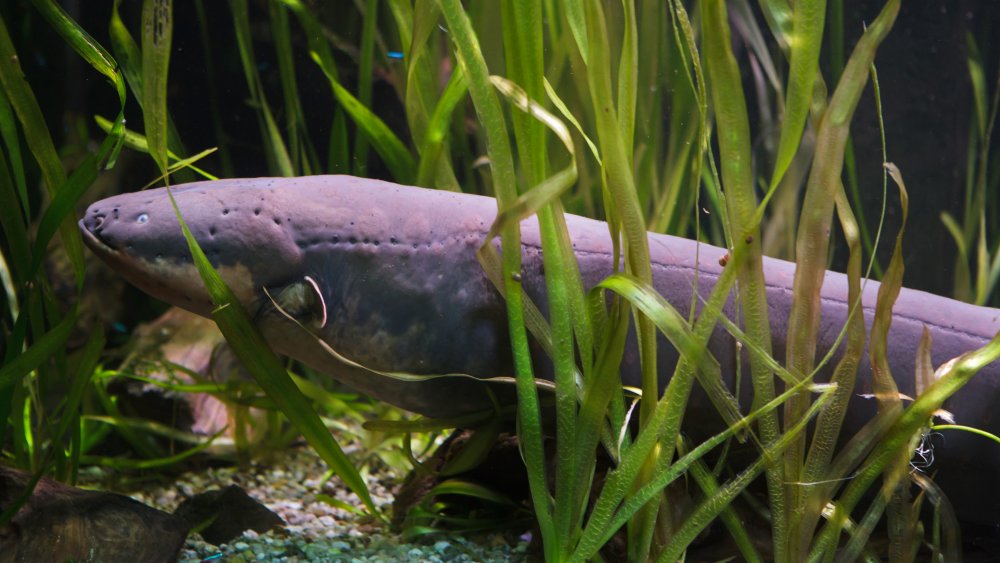
The electric eel that powers a small lamp is not a solution to the world’s energy crisis, nor is it a parlor trick. It is a breathtaking window into the power of natural selection. For millions of years, this remarkable knifefish has evolved a sophisticated electrogenic system that allows it to navigate darkness, hunt with precision, and defend against predators. The 2019 experiment at Vanderbilt University was more than a viral video; it was a symbolic moment where animal biology met human technology.
As we face growing challenges in energy storage, biomedical engineering, and environmental conservation, the electric eel reminds us that the most elegant solutions are often found in the wild places of our planet. The next time you flip a switch and light a lamp, take a moment to marvel at the fact that a fish slithering through the Amazon’s blackwaters has been doing something similar albeit for very different reasons for millions of years. The lamp lit by an eel is not just a light; it is a spark of inspiration for a more bio-inspired, sustainable, and awe-inspired future.