Deep within the world’s tropical rainforests, a microscopic horror story unfolds daily. It is a tale not of predators stalking prey in the usual sense, but of a subtle, insidious takeover. Here, an unassuming fungal spore possesses the power to rewrite the very software of an animal’s brain. This is the reality of the “zombie ant fungus,” a parasite so sophisticated that it has inspired video games, movies, and a decade of intense scientific research.
The term “zombie” is often used figuratively, but in the case of ants infected by Ophiocordyceps unilateralis, it is terrifyingly accurate. This fungus does not simply kill its host; it commandeers its body and mind, turning a once-autonomous insect into a puppet that marches to its own doom. Understanding this process is not just a morbid curiosity. It offers profound insights into the limits of parasitic control, the evolution of complex life cycles, and potentially, even new avenues for human medicine.
Why should you care about a fungus that attacks ants? Because the mechanisms within this microscopic battle have already begun to inspire new classes of anti-cancer drugs and immunosuppressants. The zombie ant is a living laboratory, showcasing nature’s most ruthless and creative survival strategies. Let us journey into the mandibles of the infected to uncover the step-by-step transformation from a healthy foraging ant into a hollow vessel for fungal reproduction.
The Quiet Hunter: Understanding Ophiocordyceps
The villain of our story is Ophiocordyceps unilateralis, a species complex of parasitic fungi belonging to the phylum Ascomycota. Unlike a mushroom that simply sprouts from the ground, this fungus is an active predator with a single-minded purpose: to reproduce. However, it cannot complete its life cycle on its own. It requires a specific host typically carpenter ants from the genus Camponotus to serve as its vehicle and sacrificial altar.
Here is a breakdown of its key biological characteristics:
A. Specialized Nature: There are over 400 species within the Ophiocordyceps genus, each often hyper-specialized to infect a single ant species. This specificity suggests a long, co-evolutionary arms race between the parasite and its host.
B. Environmental Niche: The fungus thrives in warm, humid tropical and subtropical forests, including the Amazon, Southeast Asia, and parts of Africa. Humidity is critical, as the final fungal fruiting body must dry out slowly to release spores effectively.
C. Lack of Direct Kill: Crucially, the fungus does not want to kill the ant immediately. A dead ant cannot move. The genius (from the fungus’s perspective) lies in keeping the host alive and functional until the precise moment it is needed.
The lifecycle of Ophiocordyceps is a masterpiece of manipulative biology. It is not a simple infection; it is a hostile takeover of the ant’s central nervous system and musculature. Scientists have only recently begun to unravel the biochemical signals that allow the fungus to control its host with such precision. For years, it was assumed the fungus ate the ant’s brain, but that is a myth. The brain remains intact it is simply bypassed.
Step-by-Step: How an Ant Becomes a Zombie
The transformation from a healthy, colony-minded ant into a lone, mindless zombie is a multi-stage process that takes approximately four to ten days. Scientists have broken this down into distinct phases.
Phase 1: Spore Infection (The Invisible Touch)
The journey begins when a microscopic fungal spore lands on the exoskeleton of an unsuspecting worker ant. The ant’s cuticle (outer shell) is its first line of defense, but Ophiocordyceps has evolved enzymes to breach it.
-
Attachment: The spore adheres using a sticky mucous layer.
-
Penetration: The fungus germinates, sending out a specialized pressure foot called an appressorium. This structure exerts mechanical force and releases chitinase enzymes that dissolve the ant’s tough exoskeleton.
-
Entry: Once a microscopic hole is made, the fungus enters the ant’s body cavity (hemocoel). At this point, the ant shows zero symptoms. It continues to forage, feed, and interact with its nestmates.
Phase 2: Proliferation and Avoidance (The Silent Spread)
Inside the ant, the fungus changes form. It transforms from a solid mycelium into single, floating yeast-like cells. This is a cunning strategy.
A. Immune Evasion: The yeast form does not trigger a strong immune response. The ant’s immune system looks for long, branching filaments (hyphae), but it often ignores these single cells.
B. Energy Hijacking: The fungus begins to consume non-vital fat bodies and muscle tissue, gradually starving the ant of energy without killing it.
C. Behavioral Cue 1 – Isolation: Around day 3, a subtle change occurs. The infected ant loses interest in the colony’s social odors and pheromone trails. It begins to wander away from the nest, an act of suicide from an ant’s perspective. The fungus is pushing the ant toward a location with specific conditions (height, humidity, temperature).
Phase 3: The “Summit Disease” and Death Grip
This is the most famous and terrifying phase. The ant, now fully controlled, climbs.
-
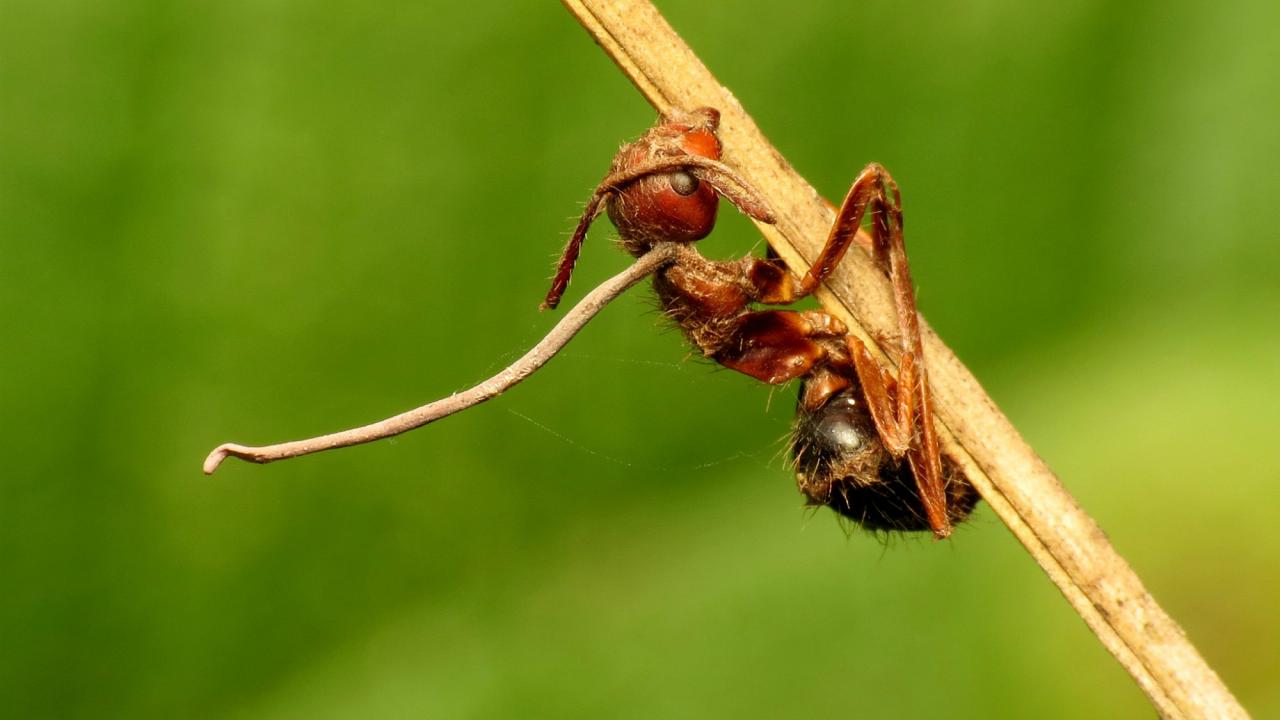
The Climb: The ant ascends a plant stem or blade of grass, usually exactly 25 centimeters above the forest floor. This height is not random; it provides optimal humidity for the fungus to later release its spores while avoiding ground-dwelling predators.
-
The Bite (Death Grip): Upon reaching the perfect spot, the fungus commands the ant to clamp its mandibles (jaws) onto the underside of a leaf vein or stem. The ant bites down with extraordinary force—so strong that even after death, the jaws remain locked. This is the “death grip.”
-
Why not destroy the brain? Researchers discovered the fungus does not need to control the brain directly. Instead, it infiltrates the ant’s muscles and likely releases neuropeptides that hijack motor neurons, bypassing the brain’s commands. The ant’s brain is intact but isolated, a prisoner in its own body.
Phase 4: The Final Sacrifice (Fruiting and Spore Release)
Once the ant is locked in place, the fungus issues the kill command. The ant dies, still gripping the leaf.
A. Biochemical Conversion: The fungus shifts from yeast cells back to mycelium. It rapidly consumes the ant’s internal organs, preserving only the exoskeleton as a shell.
B. Stalk Growth: A few days later, a fungal stalk (stroma) erupts from the back of the ant’s head. This is the fruiting body.
C. Spore Launch: The stroma matures and develops a spore-bearing capsule. Under the cover of night or during a rain shower, the capsule fires thousands of microscopic spores into the air, raining down on foraging ants below, and the cycle begins anew.
Evolutionary Mastery: Why This Strategy Works
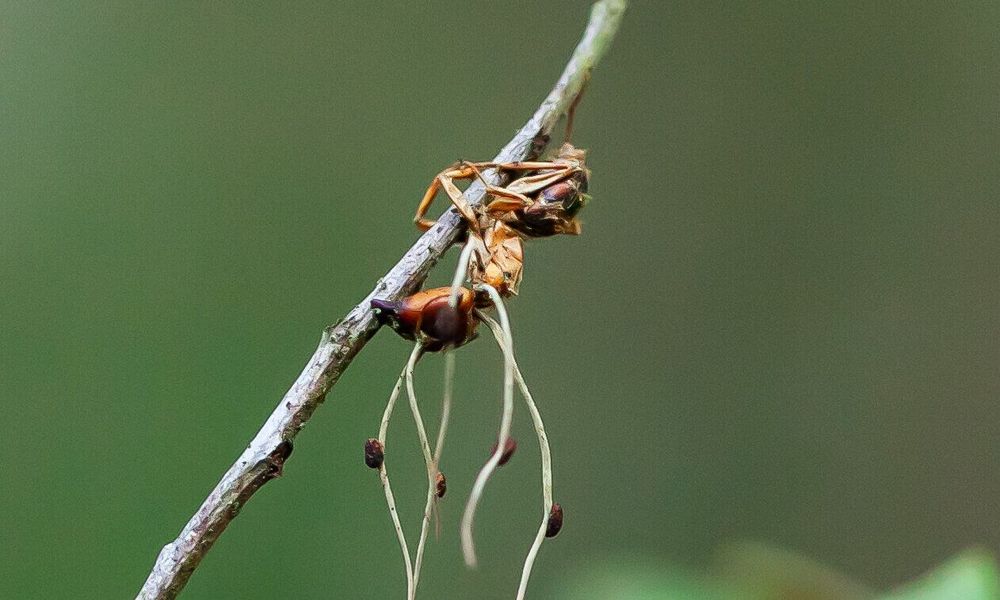
From an evolutionary standpoint, the zombie ant fungus is a resounding success. Its strategy solves a fundamental problem for a parasite: how to ensure your offspring disperse widely when your host cannot fly. By forcing the ant to climb to an elevated, prominent location, the fungus turns a grounded insect into a “spore-launching tower.”
Consider the following evolutionary advantages compared to a simpler killing strategy:
| Feature | Simple Killer Fungus | Zombie Ant Fungus |
|---|---|---|
| Host Death Location | Random (on forest floor) | Specific (25 cm high on a leaf vein) |
| Spore Dispersal | Low, blocked by undergrowth | High, carried by wind and rain |
| Host Utilization | Eats host immediately | Uses host’s muscles to climb and bite |
| Infection Rate | Low | High (targets active foragers) |
This specialization is so efficient that in some ant colonies, up to 10% of the workforce can be infected and removed during peak fungal season. The colony reacts by removing infected individuals, but often, the fungal manipulation is too subtle and too fast.
The Ant’s Defense: A Biological Arms Race
Naturally, ants have not remained passive victims. An evolutionary arms race has been raging for millions of years. Ant colonies have developed several counter-strategies to combat the fungal threat.
A. Social Immunity (Hygiene): Healthy ants are fastidious groomers. They use their mandibles and antennae to remove fungal spores from their own bodies and those of their nestmates (allogrooming). This removes spores before they can germinate.
B. Graveyard Behavior: Some ant species have evolved “undertaker” ants. These specialized workers patrol the nest and surrounding foraging trails. If they detect a zombie ant acting erratically or showing fungal filaments, they physically carry it far away from the nest before it can climb and release spores.
C. Nest Structure: The humid, crowded interior of an ant nest is a perfect environment for fungal growth. In response, many species build ventilation shafts and internal temperature-regulating structures that inhibit spore germination.
D. Chemical Countermeasures: Ants produce antibiotic compounds from specialized glands. Some research suggests ants infected with a non-lethal fungal strain can develop “immune memory,” triggering a faster, stronger response if attacked by Ophiocordyceps later.
However, the fungus evolves just as fast. Some Ophiocordyceps strains have begun to produce chemicals that mask their presence, tricking the undertaker ants into ignoring infected nestmates until it is too late.
Beyond Ants: Other Zombie Parasites in Nature
The zombie ant fungus is the most famous example of behavioral manipulation, but it is far from the only one. Nature is filled with “mind-control” parasites that exploit different hosts in eerily similar ways.
A. The Zombie Snail (Leucochloridium paradoxum): This flatworm infects a snail’s eyestalks, making them pulse with bright, worm-like colors. The snail is driven into open, high-visibility areas, where a bird mistakes its pulsating eyestalks for a caterpillar. The bird eats the snail, and the flatworm reproduces inside the bird.
B. The Zombie Spider (Pompilidae wasps): The tarantula hawk wasp stings a tarantula, paralyzing it but not killing it. The wasp lays a single egg on the spider’s abdomen. When the larva hatches, it slowly consumes the still-living spider, saving the vital organs for last.
C. The Zombie Caterpillar (Baculovirus): A virus infects caterpillars and forces them to climb to the top of plants. Once there, the virus liquefies the caterpillar’s body, causing it to “rain” viral particles onto the leaves below, infecting new hosts.
D. Toxoplasma gondii (Mice and Humans): This protozoan parasite makes infected rodents lose their innate fear of cat urine, making them easily caught. The parasite reproduces in cats. In humans, latent toxoplasmosis has been controversially linked to changes in risk-taking behavior and personality.
These examples confirm that the “zombie” lifestyle is a successful, recurring evolutionary solution for parasites across the tree of life. It highlights a profound and unsettling truth: free will might be more fragile than we assume.
Scientific and Medical Breakthroughs from the Zombie Fungus
While horrific, Ophiocordyceps is not evil—it is simply a survivor. And human science has learned to harvest its unique biochemistry for tremendous benefit.
1. Immunosuppressants: A compound isolated from a related fungus, Ophiocordyceps sinensis (Caterpillar fungus), has been used in traditional Chinese medicine for centuries. Modern research has identified active compounds like cordycepin that modulate the immune system, potentially helping to prevent organ transplant rejection and treat autoimmune diseases.
2. Anti-Cancer Potential: Cordycepin has shown remarkable promise in laboratory studies. It can:
-
Trigger apoptosis (programmed cell death) in various cancer cell lines.
-
Inhibit tumor growth and metastasis in animal models.
-
Act synergistically with existing chemotherapy drugs.
3. Neurobiology Research Tool: The zombie ant fungus provides scientists with a unique window into brain-body control. By studying which fungal proteins control the ant’s muscles, researchers are discovering fundamental principles about how motor neurons work. This could lead to new treatments for neuromuscular disorders like Parkinson’s disease and muscular dystrophy.
4. New Antibiotics: As antibiotic resistance rises, researchers are searching for novel compounds. The chemical warfare between Ophiocordyceps and ant bacteria produces unique secondary metabolites that could be effective against drug-resistant bacteria like MRSA.
5. Pest Control: In agricultural settings, there is interest in using Ophiocordyceps as a biological pesticide. While challenging (the fungus is very specific), understanding its infection mechanisms could lead to “smart” fungicides that only target pest ants and not beneficial insects.
Ethical Questions and the “What If” Factor
The zombie ant phenomenon inevitably raises uncomfortable questions for humans. If a simple fungus can so completely dominate the motor functions of an ant with a brain containing ~250,000 neurons, what does that say about the potential for similar biological control in more complex brains?
Is it possible for a parasite to create a human zombie? The short answer is no not in the way it happens in ants. Human brains are orders of magnitude more complex, with ~86 billion neurons. However, several parasites and prions already alter human behavior subtly.
-
Rabies causes aggression, paranoia, and hydrophobia (fear of water), directly influencing the host’s behavior to facilitate transmission via saliva.
-
Toxoplasma gondii has been correlated (though not definitively proven) with increased risk-taking, slower reaction times, and a higher incidence of schizophrenia.
-
Prion diseases like Fatal Familial Insomnia completely destroy the brain’s ability to regulate sleep and movement.
While a true “zombie fungus” for humans is biologically impossible, the philosophical implications remain: Where does my behavior end, and the influence of my microbiome (the trillions of bacteria living inside me) begin? The zombie ant blurs the line between “self” and “environment.”
Conclusion: Nature’s Masterpiece of Manipulation
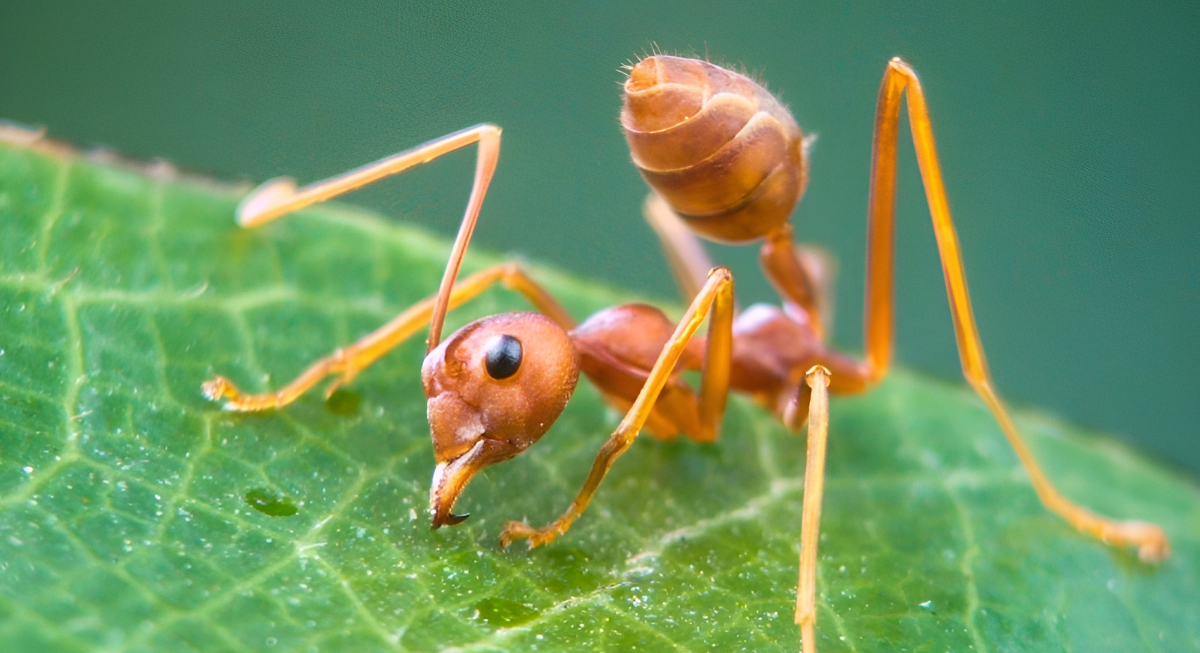
The fungus that turns ants into zombies is far more than a Halloween horror story. It is a testament to the power of natural selection to produce behaviors that seem almost intelligent. The Ophiocordyceps fungus has, over millions of years, written a brutal instruction manual encoded in its DNA: land, enter, hide, redirect, climb, bite, kill, and launch.
For the ant, the story is tragic. For the scientist, it is a goldmine. For the casual observer, it is a humbling reminder of nature’s complexity. The next time you see an ant marching in the jungle, look closely. Is it truly in control of its own path, or is it a puppet on a fungal string?
The rainforest hums with life and death, but the quietest, most sophisticated predator is not a jaguar or a snake. It is a microscopic spore waiting for a single, unsuspecting step. The zombie ant is real. It is here. And it is arguably one of the most fascinating biological phenomena on planet Earth.